Looking to build Leaders? Invest in Performing Arts!
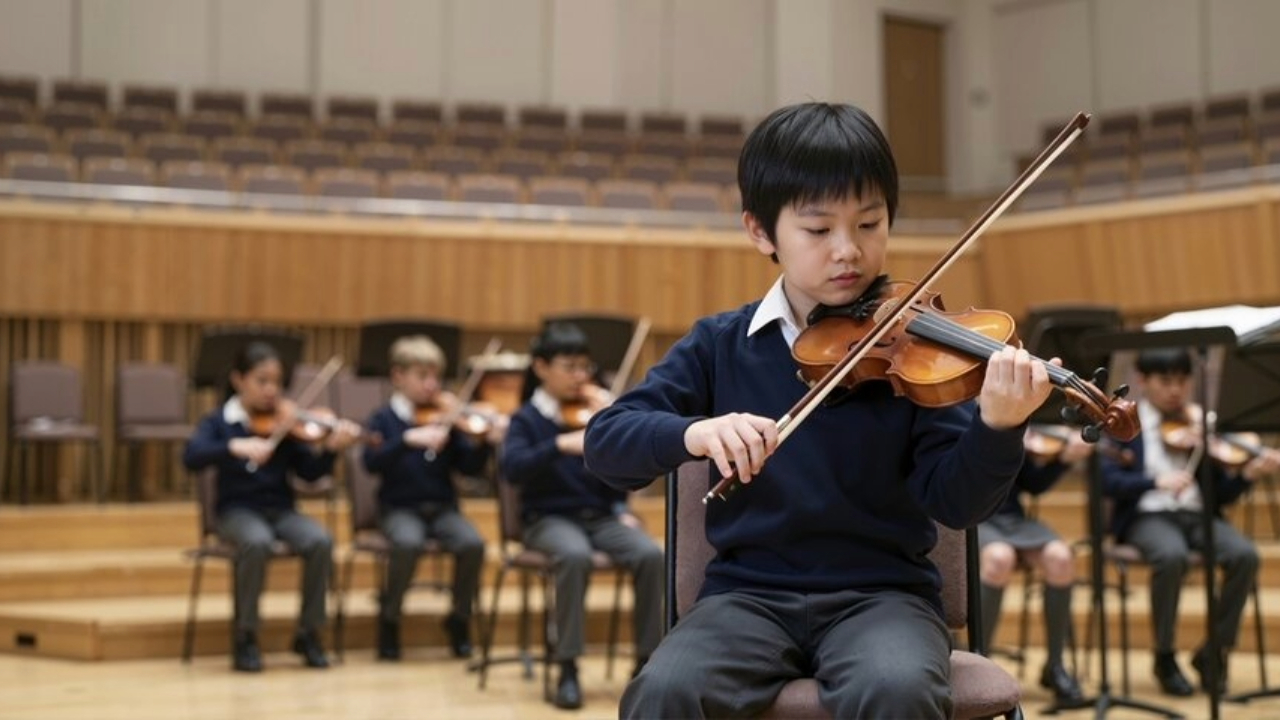
Science gives us the ‘how’ of life. It tells us ‘how’ the world works. The arts can give us the ‘why’ of life. Using speech for communication is science. The way we use our voices to express life is art. The Performing Arts (PA) help us manage space, sound, time, feeling, other non-tangible things, and everything in between, just like leadership. If building student and teacher leaders at your school is the goal, your methods must include a thriving PA program. In any organization, workers will tell you the ‘how’. But, our PA powered leaders will always give your school the ‘why’ it needs to breed success.
So, there is our justification. We have established how ideas of leadership often include managing time, managing space, managing people, managing emotions, and the expression of the intangible. There is no better way to build students that mirror these ideas than participation in a thriving PA program. But, how does it work?
Thriving PA programs give students opportunities to lead, and the tools to solve problems in ways not always seen in other areas. PA programs build a culture of accountability, improvement, self/peer feedback, practice, limited resources and deadlines. These are all pieces of a very tasty leadership pie. Lastly, Exceptional PA programs empower teachers to lead through all of the non-teaching work that is involved in the PA like: program building, event planning, budgeting, resource management, time management, schedule management, facilities management, etc. PA programs build leaders building-wide.
Within exceptional school PA programs students have opportunities to lead and solve problems through titled leadership positions, mixed grade level classes/groups, personal decision making, and through the creative process.
School PA organizations often come with merit based leadership positions. In Music, these could include being ‘first chair’ or a ‘principal’ player. These roles are usually reserved for the best players in any given instrument section. Music organizations also have band captains, section leaders, drum majors, or others that are in charge of musical leadership based on ability. Theater and dance organizations also have leadership positions. They can look like principal dancers, stage manager, lead actor, or otherwise. PA organizations can also have administrative leadership positions like treasurer, historian, band captain, social chair, librarian, etc. Other school organizations do not often provide these types of leadership opportunities during the day, without being extracurricular. Leaders in these roles provide input in their titled areas, and they problem solve within the context of their classes. These classes often happen during the exploratory, elective block in the school day. With this scheduling consideration in mind, these classes often mix grade levels into one class. This provides additional non-titled opportunities for leadership. Mixed grade level classes during the school day are rare. But for the arts, seeing an 11th grade student impart knowledge and leadership onto a 9th grade student is a daily occurrence. In reference to personal leadership and problem solving, students in the PA often have to inventory their own skills and knowledge to solve some problem at hand.
In Music, that problem often looks like a part of the music they need to play. In theater or dance it's memorizing lines or moves in order to contribute to the overall artform. Students, using their skills, their knowledge, and their time, will find ways to solve those problems. And, titled leaders like section leaders, or un-titled leaders like upperclassmen will often guide students through these problems as well. Lastly, the creative process requires buy in from all parties. Performing something, giving/receiving feedback, making a decision then performing something again is an integral part of PA learning. These are also essential parts of leadership.
The idea of culture has been tossed around all types of organizations from schools, to businesses, to sports teams, and the like. Culture is an abstract thing. But, in the PA, a positive organizational culture is easy to see. PA programs survive off of accountability, mandatory improvement, feedback, practice, team dynamics, deadlines, and limited resources. These are the types of oils that fuel the engine of any successful organization, especially a school. When performing music, dance, or drama every individual person has to be spot on in service of the overall piece of art. There is your accountability. One wrong note? The whole team suffers. This does not happen in Math class. The first day you see a play, or piece of music, or some choreography, one often cannot do it. Yet, there is a performance scheduled on the school calendar. How will we get there? There is your improvement. Bringing a creative vision to life requires feedback. Students make art. The teacher observes. The teacher offers feedback. The students make art again, but better. Cultures built on collective feedback, constructive criticism and constant improvement are strong. PA programs are built on practice. Strategies for improvement are mandatory for successful performances. PA almost always takes place in a team setting, just like life. Lastly, PA organizations are always trying to put on performances where the content is a little too hard and there is not quite enough time. They say innovation is the product of a need, and not enough time. With that in mind any organization with a culture of improvement, accountability, feedback, practice, teamwork, and not enough resources will create leaders who prioritize the same things.
Lastly, PA programs build adult leaders within a school as well. A thriving PA program requires adult leaders who can manage: budgets, resources, time, money, schedules, facilities, inventory, and people. So, when an administrator aims to build a PA program what they are really saying is, ‘Mrs. Johnson, we believe in you and we are empowering you to be a school-wide leader.’
To close, PA programs in schools are a microcosm of everything that leadership is among both adults and students. To foster leadership within a school is to host successful PA programs. Schools with these programs breed leaders. Schools without them are continuously searching for ways to get one.
By Michael Skillern
Stay up to date
Subscribe to the free GESS Education newsletter and stay updated with the latest insights, trends, and event news every week. Your email address will remain confidential