Personalised Learning in the Early Years Foundation Stage
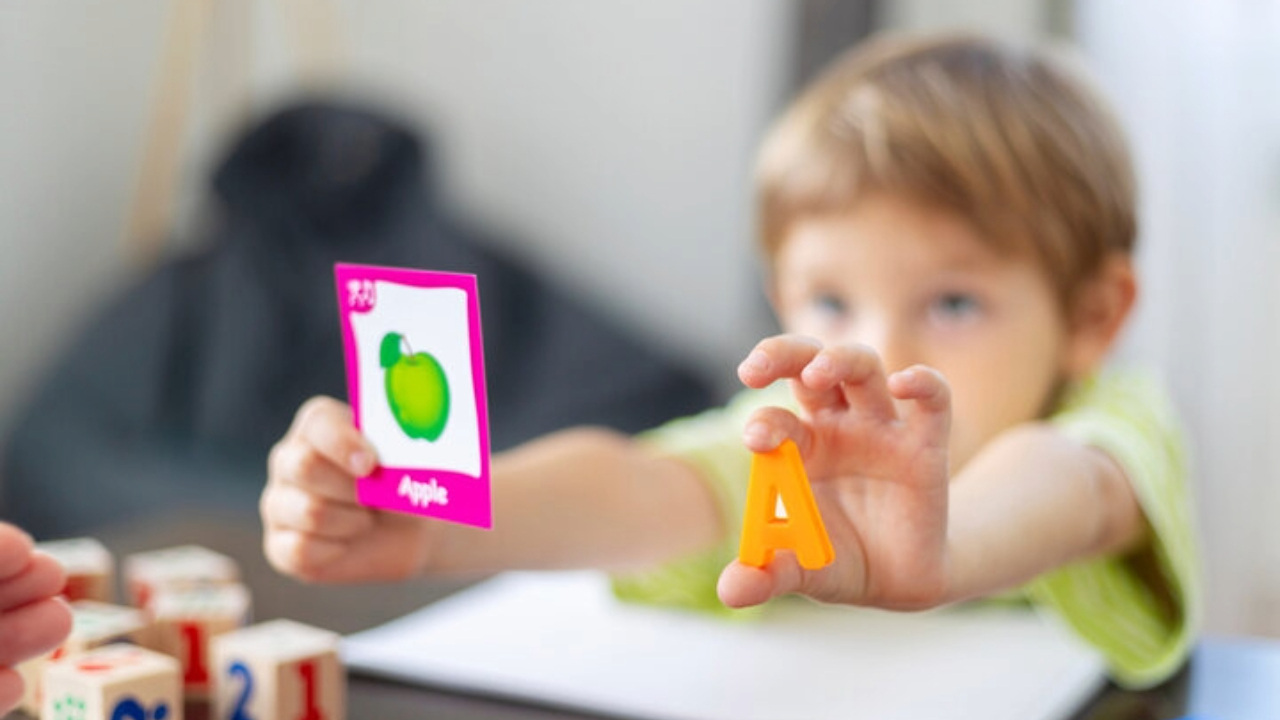
Personalised learning is at the heart of high-quality practice in the Early Years Foundation Stage (EYFS). It recognises that every child is a unique individual, with their own interests, strengths, needs, and pace of development. By tailoring teaching and provision to each child, practitioners create an environment where all children feel valued, supported, and challenged to reach their full potential. Personalised learning is not merely about differentiation—it is about understanding each child deeply and responding thoughtfully to nurture curiosity, resilience, and a lifelong love of learning.
Understanding Personalised Learning in the EYFS
Personalised learning means planning experiences around the individual child rather than expecting all children to learn in the same way or at the same pace. It is built on a strong understanding of each child’s interests, learning style, cultural background, language development, and stage of growth. When personalised learning is implemented effectively, children are more engaged, motivated, and confident in their learning.
Practical Examples of Personalised Learning:
Maths through Interests: A child fascinated by trains can explore mathematics by counting carriages, measuring tracks, creating symmetrical stations, or graphing different train lengths. This not only builds numeracy but also spatial awareness and logical thinking.
Literacy through Themes: A child who loves animals may practise sequencing and storytelling by sorting toy animals into habitats, writing simple captions for each, or matching animal names to initial sounds in phonics practice.
Music-based Learning: A child passionate about music can develop patterns and rhythm by clapping beats, creating musical compositions, or even exploring literacy through song lyrics, identifying rhyming words or creating their own verses.
Observation and Assessment: The Cornerstone of Personalised Learning
High-quality observation is the foundation of personalised learning. Practitioners observe children during both adult-led and child-initiated activities to understand skills, interests, and developmental needs. These observations guide the planning of next steps, helping identify children who require additional support as well as those ready for enrichment.
Examples:
A child enjoys building with blocks but struggles with symmetry. The practitioner introduces a challenge: “Can you make both sides of your bridge match?” This builds on the child’s interest while strengthening spatial reasoning.
A child loves storybooks but avoids group phonics. The practitioner arranges a one-to-one storytelling session with puppets, subtly embedding phonics practice through repetition of specific sounds.
Observation also enables practitioners to notice emerging strengths and interests that might otherwise be overlooked. For instance, a child who quietly experiments with water play may be developing early scientific thinking and problem-solving skills. The practitioner can scaffold this by introducing measurement tools or floating/sinking experiments.
Child-Initiated Learning: The Heart of Personalisation
Child-initiated learning empowers children to make choices, fostering engagement, intrinsic motivation, and independence. Skilled practitioners seize these moments to extend learning through open-ended questions, modelling language, and introducing new challenges.
Examples:
A child drawing a castle is encouraged to narrate a story about who lives there and what rooms they need. This develops language, creativity, and imagination. Later, the project could evolve into building a 3D castle or writing a short story.
A child role-plays running a shop. The practitioner introduces coins, price tags, and customer scenarios, extending numeracy, social interaction, communication skills, and understanding of real-life concepts.
Child-initiated learning also allows for creativity and problem-solving. A child designing a spaceship from recycled materials is developing engineering skills, spatial awareness, and collaborative skills if working with peers. Practitioners can support this by introducing challenges, such as balancing weight or creating moving parts, to push learning further without diminishing the child’s autonomy.
Supporting Diverse Needs and Abilities
Personalised learning ensures that every child, regardless of ability or need, can thrive. Differentiation, scaffolding, and targeted interventions are essential.
Examples:
EAL Learner: A child learning English is supported with visual aids, gestures, real objects, and interactive storytelling to reinforce vocabulary and comprehension.
Advanced Learner: A child excelling in problem-solving might explore open-ended science investigations, such as testing material properties or creating their own experiments, then reflect on their findings.
POD Support: A child with fine motor challenges uses adapted materials like chunky crayons or playdough to build hand strength before progressing to precise pencil control activities.
Personalised learning also considers emotional and social needs. Children with anxiety may require a predictable routine, a quiet space, or one-to-one support, while highly social children may benefit from collaborative problem-solving activities that foster teamwork and leadership.
The Learning Environment as a Personalised Tool
The physical and social environment plays a vital role in personalised learning. Thoughtfully organised spaces with open-ended resources, flexible areas, and opportunities for choice allow children to engage at their own pace and revisit learning as needed.
Examples:
A mathematics corner with measuring tapes, counting beads, and balance scales allows children to explore independently or collaboratively with guidance.
Displays reflecting children’s cultures, interests, and achievements foster a sense of belonging and stimulate conversation and inquiry.
A reading corner with multilingual books, cushions, and cosy lighting invites children to relax, engage with texts, and share stories with peers and family.
The environment should also adapt to children’s evolving interests. For example, if a child shows a keen interest in gardening, the area could be enhanced with planting stations, magnifying glasses, and growth charts to integrate literacy, numeracy, and science in meaningful ways.
Partnership with Parents
Parents are essential partners in personalised learning. Regular communication allows practitioners to understand children’s interests, experiences, and achievements outside school, creating continuity in learning and ensuring that activities are meaningful and relevant.
Examples:
A parent mentions a child loves baking. Practitioners create a pretend bakery with recipe cards, measuring tools, and labels, developing numeracy (measuring), literacy (writing menus), and social skills (role-play with peers).
A parent shares a child’s interest in gardening. A planting station encourages observation, recording growth, and comparing plants, integrating science, maths, literacy, and responsibility for living things.
Personalised learning is central to effective EYFS practice. By understanding each child deeply, responding to their interests, and providing flexible, inclusive opportunities, practitioners build strong foundations for lifelong learning. When children feel seen, understood, and supported as individuals, they develop confidence, curiosity, resilience, and a genuine love of learning. These outcomes extend far beyond the early years, shaping children’s social, emotional, cognitive, and creative growth. Every child’s learning journey is unique. By observing, listening, and responding thoughtfully, educators create classrooms where every child can thrive—where reading, problem-solving, creativity, and emotional growth are nurtured in ways that are meaningful to the individual. Personalisation is not a strategy but a philosophy: it ensures that each child’s potential is recognised, celebrated, and realised.
By Remediana Dias
Stay up to date
Subscribe to the free GESS Education newsletter and stay updated with the latest insights, trends, and event news every week. Your email address will remain confidential