Why Access to AI Isn't Enough
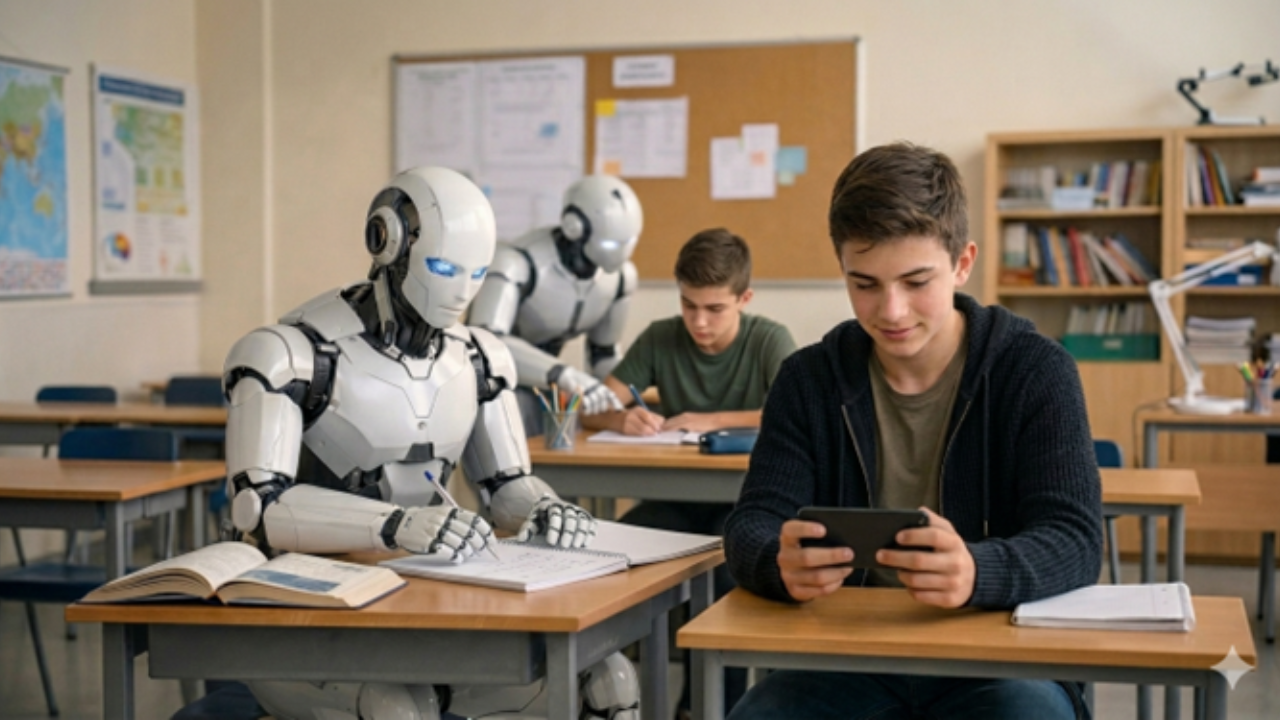
Last term, I assigned an informative essay. Two of my weaker students submitted work within hours — polished, structured, completely written by AI. They had copied full essays without learning anything. A third student, equally struggling, spent the week with me. I showed him how to outline. I had him use AI to generate ideas, then choose which ones were his. He refined sentences with AI's help, but wrote them himself. By the end, he had a real essay and real skills.
Same tool. Same assignment. Completely different results.
The problem is not access to AI. My students all have it. The problem is what they do with it — and that depends entirely on the guidance they receive.
How Teachers Guide the Process
Some capable students already know this instinctively. They use AI as a thinking partner: for structure, feedback, refinement. They learn from it. But weaker students, the ones who need support most, often use it as a shortcut. They do not develop their writing skills. They become dependent. The invisible gap widens.
This is why teachers must intervene. I do not simply allow AI in my classroom — I teach students how to use it. When assigning an informative essay, I model the entire process first. I show them how to brainstorm using AI, how to select and organize their own ideas, how to draft their own sentences, and how to use AI only for refinement and feedback. I demonstrate each step. Then I have students practice with me watching. I give immediate feedback. I correct misuse. Over time, students learn to see AI as a support tool, not a replacement for thinking.
The difference is dramatic. Students who receive this guidance become more independent, not less. They develop actual writing skills. They understand structure. They can organize their thoughts. They learn to revise. By contrast, students left to figure out AI on their own often give up and let the tool do everything. They submit work, but they have learned nothing. The skill gap between these two groups grows wider with every assignment.
This is the invisible gap. It is not about access. It is about guidance.
The Role of School Leadership
But this cannot happen at scale without school leadership. Without clear policies and professional development, teachers are left guessing. Some students get guidance. Others do not. Some teachers understand how to integrate AI meaningfully. Others ban it or ignore it. The inconsistency is the problem.
Leaders must move beyond simply permitting AI and instead establish clear expectations. This means providing targeted professional development so teachers know how to teach with AI, not just teach about it. It means creating guidelines that distinguish between appropriate and inappropriate use. It means monitoring outcomes to ensure that AI is actually supporting learning, not replacing it.
Leadership must also ensure that AI use is aligned with the school's vision and learning goals. If a school values critical thinking and independence, then AI must be taught in ways that support those values. If a school claims to prioritize equity, then leadership must ensure all students receive the same quality of guidance, not just the ones whose teachers happen to understand AI well.
Without this direction from above, schools end up with fragmented approaches. One teacher structures AI use carefully. Another allows students free rein. One class develops skills. Another produces dependency. The students who suffer most are the ones who need support — the weaker and less motivated ones who lack the instinct to use tools wisely.
The Bigger Picture
The core issue is simple: access to a tool does not equal understanding how to use it well. A student with access to AI but no guidance is like a student with access to a library but no instruction in research. The tool is there, but the skill is not.
This is why the role of teachers is not diminished by AI — it is transformed. We must now teach not just content, but wisdom about how to use powerful tools. We must model good practices. We must correct misuse. We must help students develop judgment about when to rely on AI and when to rely on themselves.
Similarly, school leadership must recognize that AI integration is not a technical problem. It is a pedagogical problem. It requires clear thinking about what we value, what skills we want students to develop, and how we ensure all students benefit equally. Without this clarity, AI will widen existing gaps. Students from homes where parents understand AI will thrive. Others will fall further behind.
Conclusion
The future of education is not defined by technology. It is defined by how we choose to use it — and whether we are willing to do the work of teaching students to use it well. Access to AI is necessary, but it is not sufficient. What matters is guidance. What matters is structure. What matters is teachers who understand their role, and leaders who create the conditions for that role to succeed.
When schools approach AI this way, it becomes a genuine tool for learning and independence. When they do not, it becomes a tool for dependency and inequality. The choice is ours.
By Mahmoud Amer
English Teacher
Stay up to date
Subscribe to the free GESS Education newsletter and stay updated with the latest insights, trends, and event news every week. Your email address will remain confidential