Building the Foundations for Future Readiness in the Early Years
“The principal goal of education is to create individuals who are capable of doing new things, not simply repeating what other generations have done.” - Jean Piaget
For many years, conversations about future readiness have centred on secondary and tertiary education, with a strong focus on AI literacy, digital fluency, innovation and entrepreneurship. Yet the truth is unmistakable: the foundations for every future-ready skill are laid long before a child can read, write or sit an exam.
Future readiness begins in the early years, where play, curiosity and relationships shape the developing brain. In the United Arab Emirates- where innovation is a national priority- early childhood education is not simply preparation for the future; it is the future. The strategy we adopt today for our youngest learners will determine the capabilities, mindsets and resilience of tomorrow’s leaders.
At its core, future readiness is about building human capacity, not delivering content. It emerges through the development of:
- Executive function –refers to the set of mental skills that help children plan, focus attention, remember information, manage their emotions and adapt to new situations. It is the brain’s ‘control centre’, enabling children to organise their thinking, solve problems and navigate daily challenges with increasing independence.
- Creativity and problem solving – a child’s ability to generate ideas, explore possibilities and think flexibly when faced with challenges. Through open-ended play and experimentation, children learn to imagine, test, adapt and refine their thinking- building the innovative mindset needed for an ever‑changing world. ideas, testing possibilities and thinking flexibly.
- Collaboration and communication – a child’s ability to express their ideas, listen to others, negotiate meaning and work together towards shared goals. Through social play and interaction, children learn to communicate clearly, build empathy and develop the cooperative skills that underpin positive relationships and effective teamwork.
- Resilience and wellbeing – a child’s ability to feel safe, secure and emotionally balanced, while developing the confidence to cope with challenges and recover from setbacks. Through nurturing relationships and supportive environments, children learn to manage their emotions, persist through difficulties and build the inner strength needed for lifelong learning.
- Curiosity and agency – a child’s drive to explore, question and make sense of the world, alongside their growing confidence to make choices and lead their own learning. When children are encouraged to follow their interests, experiment and take initiative, they develop a strong sense of ownership, motivation and independence.
These competencies cannot be cultivated through worksheets or formal instruction. They grow from rich, hands-on, experiential learning- the kind early years educators facilitate every single day.
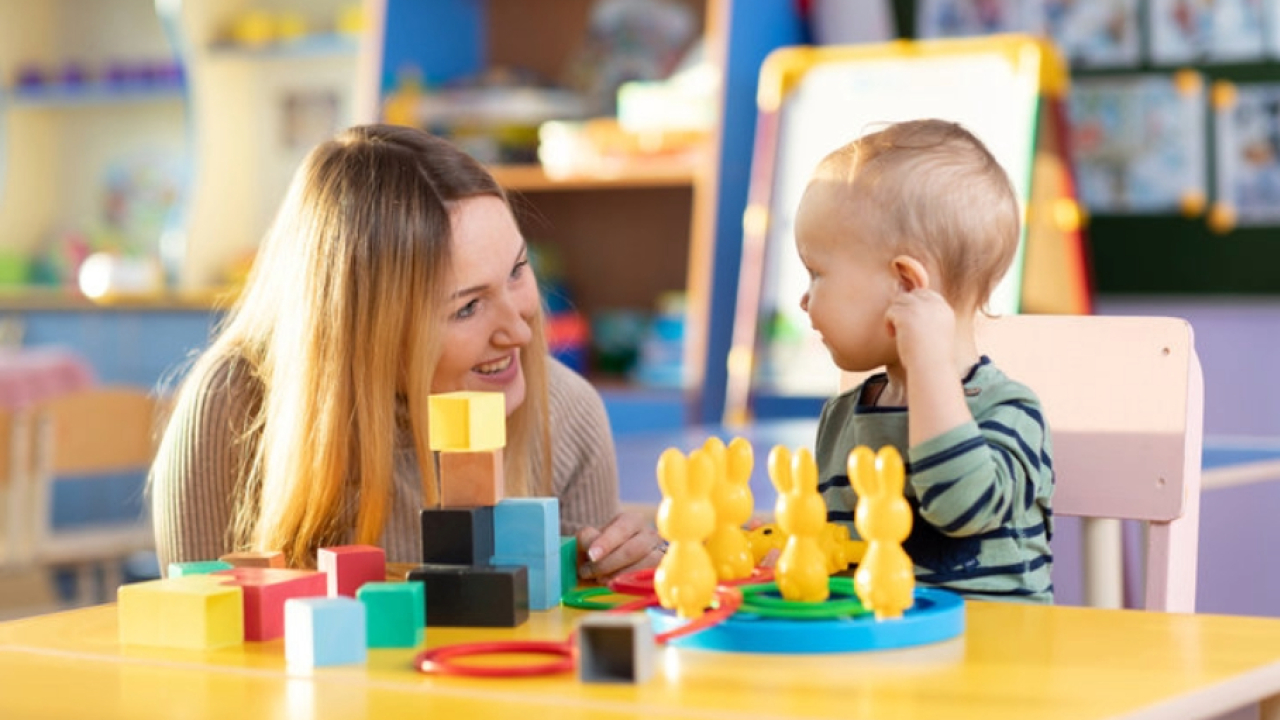
A child mixing sand and water in the mud kitchen is not “just playing”; they are hypothesising, testing, adjusting and persisting. A child building a block tower with friends is practising communication, empathy and conflict resolution. A child selecting their own loose parts is developing agency, autonomy and decision-making. These moments are future readiness in its purest form.
In today’s world, the ability to think creatively and adaptively is far more valuable than memorising information. Play naturally nurtures these qualities, enabling children to:
- Explore cause and effect
- Develop symbolic and abstract thinking
- Build social understanding
- Strengthen neural pathways for attention and self-regulation
- Learn to cope with uncertainty and challenge
Yet play is still too often viewed as a break from learning. For young children, play is learning. When children are given time, space and freedom to explore, they develop the dispositions that underpin lifelong learning- curiosity, confidence, creativity and resilience.
The environment plays a crucial role in this process. Far more than a backdrop, it is the “third educator,” shaping how children think, explore and grow. High-quality environments offer natural, open-ended materials that spark imagination, encourage risk-taking and experimentation, reflect cultural identity, support calm concentration through predictable rhythms, prioritise process over product and give children real choices and responsibilities. When children feel trusted and capable, they behave like thinkers.
Educators, too, must understand the significance of their role. They are not preparing children for the future- they are shaping it. They are the architects of children’s mindsets. Every interaction, every decision and every connection contributes to the emotional and cognitive foundations that last a lifetime. By asking open-ended questions, modelling curiosity, co-regulating emotions, supporting resilience and responding intentionally to children’s cues, educators create psychologically safe spaces where mistakes are valued, and children are partners in learning.
The final piece of the puzzle lies in leadership. For early years settings to become true hubs of innovation, leaders must evolve. They must recognise that culture shapes practice, and practice shapes children. Leaders need to champion play-based, inquiry-led pedagogy; invest in meaningful professional development; understand national frameworks and align strategy with global research; prioritise deep thinking over compliance; engage parents as partners; and use documentation to drive reflection and improvement. When leaders embed future-ready thinking across their setting, it becomes the heartbeat of the organisation.
The United Arab Emirates is bold, ambitious and future-focused, with an unrivalled commitment to innovation. Yet the most powerful innovation strategy is not found in laboratories, universities or corporate offices- it is found in the nation’s nurseries and early childhood centres.
Future readiness begins at birth. Our early years settings are not simply preparing children for the world- they are shaping the leaders who will define it.
By Lara Hudson
Education Consultant
Excelsior Group
Stay up to date
Subscribe to the free GESS Education newsletter and stay updated with the latest insights, trends, and event news every week. Your email address will remain confidential