Building Learning in the Early Years: How Conversations Can Change Children’s Lives for the Better
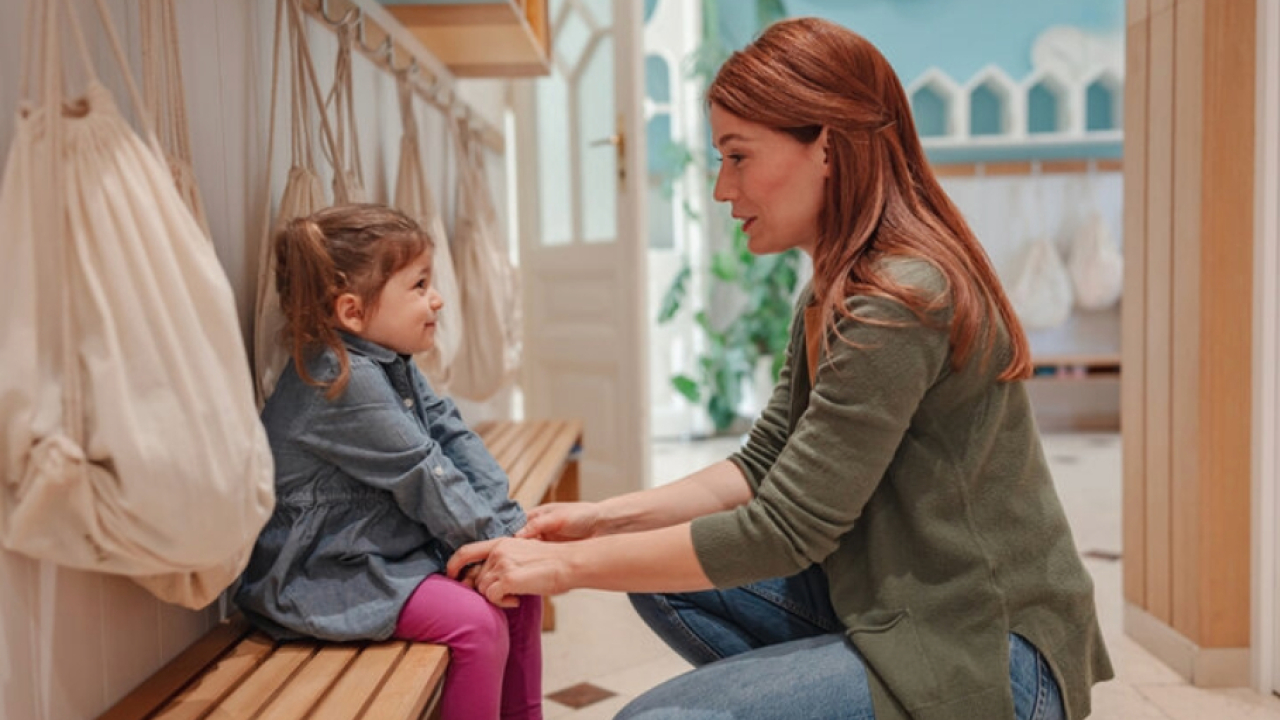
The early years of a child’s life are a period of extraordinary growth. During this time, children develop the foundations for thinking, communicating, relating to others, and understanding the world. Among all the experiences that shape early learning, conversation stands out as one of the most powerful and transformative. Simple, meaningful interactions between children and teachers—talking, listening, questioning, and responding—can profoundly influence children’s language development, confidence, emotional well-being, and long-term academic success. This article explores how conversations build learning in the early years, why they matter so deeply, and how teachers—parents and teachers—can use purposeful conversations to positively change children’s lives.
Why Conversations Matter in the Early Years
Conversation is more than just exchanging words. It is a dynamic process that helps children make sense of their experiences and develop a sense of belonging and self-worth. Research consistently shows that children who are exposed to rich, responsive conversations in their early years:
- Develop stronger language and vocabulary skills.
- Show better problem-solving and critical thinking abilities.
- Form secure relationships with teachers and peers.
- Are more confident communicators and learners later in life.
When teachers engage children in meaningful dialogue, they send a powerful message: your thoughts matter. This sense of being heard and valued can shape a child’s motivation to learn for years to come. For example: A child brings a leaf to a teacher. Instead of simply saying, “Nice leaf,” the teacher might respond: “You found a leaf with so many colours. What made you choose this one?” This simple question invites the child to reflect, explain, and take pride in their thinking. In the early years, the brain develops rapidly, forming millions of neural connections every second. Conversations play a vital role in strengthening these connections.
One-sided talk, such as giving instructions or asking closed questions, is far less effective than serve-and-return interactions. In these exchanges:
- The child serves by speaking, gesturing, or expressing an idea
- The teacher returns by responding meaningfully, expanding, or asking a thoughtful question
Example: A child hands a teacher a toy car and says, “Vroom!” Teacher’s response: “Yes, it’s going so fast. Where is your car travelling to today?”
Another example: A child with limited expressive language mumbles while looking at a picture book. Teacher response: “You’re telling me something about this picture. Are you looking at the big dog? He looks very friendly.” These interactions strengthen neural pathways for language, attention, and social connection.
Language development is one of the most visible benefits of early conversations. Children learn new words not through memorization, but through meaningful use in context. Everyday conversations serve as learning moments. Daily routines provide endless opportunities for language-rich interactions:
Snacktimes: Talking about tastes, textures, colours, and choices
Outdoor play: Describing movements, weather, nature, and discoveries
Story time: Predicting outcomes, discussing characters’ feelings, comparing events
Transitions: Narrating what’s happening next (“First we tidy, then we wash hands…”)
During painting:
“You chose the blue colour. What made you pick blue?”
On a learning walk around the school:
“I notice the sky looks grey. What do you think that means?”
While enjoying messy play:
“The dough feels sticky. What happens if we add more flour?”
These small moments accumulate into powerful learning experiences.
Conversations help children understand and manage their emotions. When teachers talk with children about feelings, children learn to name, express, and regulate their emotions. Children often experience big emotions but lack the words to explain them. Supportive conversations can guide them. For example--A child is crying because their tower fell. “It looks like you’re disappointed. You worked hard on that tower. Would you like to try again together?”
A child is nervous on the first day of school. “It sounds like you’re feeling unsure about today. What part worries you the most?”
A child is excited and can’t sit still.
“Your body is full of energy. What can we do to help you use some of it before we start our activity?”These conversations build emotional literacy and resilience.
Open-ended conversations encourage children to think deeply, reason, and make connections. Questions that have more than one possible answer stimulate thinking and creativity. For example during water play: “What do you notice when you pour the water into the tall container?” During art: “Tell me about the colours you chose. What made you pick them?” During role play: “What do you think the customer needs next sign in your shop?” These questions encourage children to explain their reasoning and explore possibilities.
Through conversation, children learn how to take turns, listen to others, negotiate, and express ideas respectfully. Teachers can model and scaffold positive communication between children. For example--Two children disagree about how to build a structure. “Let’s hear both ideas. Can you explain your plan, and then we’ll listen to your friend’s plan?” A child interrupts another. “Let’s give your friend time to finish their idea. Then it will be your turn.” Children are planning a game. “How can we make sure everyone has a role in this game?” These guided interactions help children develop empathy and cooperation.
Both educators and parents play a critical role in shaping children’s conversational experiences. Here are some key Strategies for teachers.
- Listen more than you speak
- Expand children’s language
- Follow the child’s interests
- Be present and attentive
- Use rich vocabulary naturally
- Avoid rushing conversations
- Celebrate children’s ideas
If a child says, “Look, a bug!” Instead of replying, “Yes, a bug,” the teacher might say: “You spotted a tiny insect. Look at its long legs. What do you think it’s doing?” This transforms a simple moment into a learning opportunity.
High-quality conversations can help close learning gaps and promote equity. Children from all backgrounds benefit when teachers intentionally create language-rich environments. For example using home languages: “Can you teach me how your family says ‘good morning’?” Develop a conversation to connect to cultural experiences: “You mentioned your grandmother cooks a special dish. What ingredients does she use?” Teachers can also use it to affirm identity: “Your story about visiting your home country sounds exciting. What was your favourite part?” These conversations help children feel valued, understood, and proud of who they are.
In Dubai’s early years’ classrooms, children often come from a wide range of linguistic and cultural backgrounds. Purposeful conversations become a powerful tool for inclusion and language development. During free play, a practitioner notices children role-playing a family trip to the mall. By joining the play and asking open-ended questions such as, “What do families do at the mall in Dubai?” or “Which languages do you hear when you visit?”, the teacher supports vocabulary development while validating children’s lived experiences. This conversational approach aligns with EYFS principles by recognising children’s cultural capital and promoting communication and language through meaningful interaction.
Dubai offers rich real-life contexts that naturally spark high-quality conversations, supporting sustained shared thinking. While discussing transport, a teacher draws on children’s experiences of travelling on the Dubai Metro. Asking questions like, “Why do you think the Metro has a ‘Gold Class’ and ‘Silver Class’?” or “How does the Metro help people in Dubai?” encourages children to explain, reason and connect ideas. These conversations help develop expressive language, critical thinking and understanding of the world.
Conversations are most impactful when they build on children’s interests, particularly during play. In the construction area, children begin building tall towers inspired by the Burj Khalifa. Practitioners extend learning through conversation by asking, “What makes buildings in Dubai so tall?” or “How can we make this tower stronger?” This dialogue supports problem-solving, mathematical language, and deeper thinking while remaining play-based and child-led.
Given Dubai’s high number of children with English as an Additional Language (EAL), conversational approaches are essential. During snack time, adults engage children in simple but purposeful conversations about familiar foods such as dates, hummus or flatbread. Using gestures, repetition and visual prompts, practitioners model language while encouraging children to respond in words, phrases or their home language. This respectful conversational practice supports communication skills and emotional security, key foundations for learning in the EYFS.
High-quality conversations are particularly important for extending learning for children who demonstrate advanced understanding. When a child confidently explains how water is conserved in their home, the practitioner deepens learning by asking, “Why do you think saving water is important in a desert country like the UAE?” Such questions encourage higher-order thinking, enabling children to make connections between their environment, sustainability and everyday actions.
Dubai’s emphasis on respect, community and hospitality can be reflected in conversational practices. During circle time, discussions around helping others are linked to local experiences such as community iftars or charity drives. Asking children, “How do people in Dubai help each other?” supports emotional literacy, empathy and communication skills while grounding learning in children’s social reality.
In a city as diverse and dynamic as Dubai, conversations in the early years are not simply about language acquisition. They are a bridge between home and school, culture and curriculum, play and purpose. When practitioners intentionally engage children in meaningful dialogue rooted in their real-world experiences, they empower young learners with the confidence, curiosity and communication skills that can truly change lives.
The effects of early conversations extend far beyond the early years. Children who experience rich, responsive dialogue are more likely to:
- Succeed academically
- Communicate confidently
- Build strong relationships
- Develop a lifelong love for learning
These early interactions shape not just what children know, but who they become.
Building learning in the early years begins with something simple yet profound: conversation. Every thoughtful question, every moment of listening, and every shared exchange has the potential to shape a child’s future. When teachers engage children in meaningful, respectful, and responsive conversations, they nurture language, thinking, emotional strength, and confidence. Conversations are not just a teaching tool—they are a bridge to better outcomes, stronger relationships, and brighter futures for young learners. By choosing to talk with children rather than at them, we can truly change children’s lives for the better.
By Remediana Dias
Stay up to date
Subscribe to the free GESS Education newsletter and stay updated with the latest insights, trends, and event news every week. Your email address will remain confidential