Educating for Tomorrow, Leading Sustainability Through Education
“What we teach today will define the world we live in tomorrow.”
In 2026, sustainability has evolved from a global aspiration into an urgent necessity. The environmental, social, and economic challenges facing our world require a fundamental shift in how future generations are prepared. Education systems are no longer tasked solely with delivering academic knowledge, but with shaping responsible, informed, and proactive global citizens.
International frameworks such as UNESCO and the United Nations Sustainable Development Goals highlight the critical role of education in advancing sustainable development. These frameworks emphasize the need to equip learners with the knowledge, skills, and values necessary to contribute meaningfully to a more sustainable future by 2030. At the regional level, GCC countries have aligned their long-term visions with sustainability targets extending toward 2060, reinforcing the importance of embedding sustainability within education as a strategic priority.
From Awareness to Embedded Practice
Sustainability in education must extend beyond awareness. While theoretical understanding remains important, it is insufficient on its own. The objective is to cultivate a mindset that influences how students think, act, and make decisions.
Students must be guided to consider the broader implications of their actions, including how resources are used, how waste is generated, and how decisions today impact future generations. Equally important is fostering a sense of responsibility toward preserving resources for future generations. When students begin to think long term, sustainability becomes not only an academic concept, but a personal and ethical commitment.
By embedding these principles into daily learning, students shift from passive understanding to active contribution. They begin to see themselves as part of the solution rather than observers of global challenges.
The Value of Experiential Learning
Experiential learning plays a critical role in embedding sustainability. It enables students to engage directly with real-world applications, transforming abstract concepts into meaningful experiences.
Through hands-on activities, research, and project-based learning, students develop a deeper understanding of sustainability principles. This approach strengthens essential competencies such as critical thinking, collaboration, creativity, and leadership. These skills are fundamental in preparing students to navigate complex global challenges with confidence and adaptability.
More importantly, experiential learning fosters ownership. Students are not merely recipients of knowledge, they become active participants in creating sustainable solutions.
The AHIS Model, Sustainability as an Educational Framework
At Al Hekma International School (AHIS) in Bahrain, sustainability is approached as an integral component of the educational framework rather than an isolated initiative.
As a UNESCO-associated school and a founding member of the Bahrain Sustainable Schools Partnership, AHIS aligns its practices with global sustainability frameworks while ensuring relevance to local and regional priorities.
The school adopts a transdisciplinary STREAM approach, integrating Science, Technology, Research, Engineering, Arts, and Mathematics. Within this model, sustainability is embedded across subjects, enabling students to explore complex challenges through multiple disciplines and perspectives.
A Campus Designed for Learning
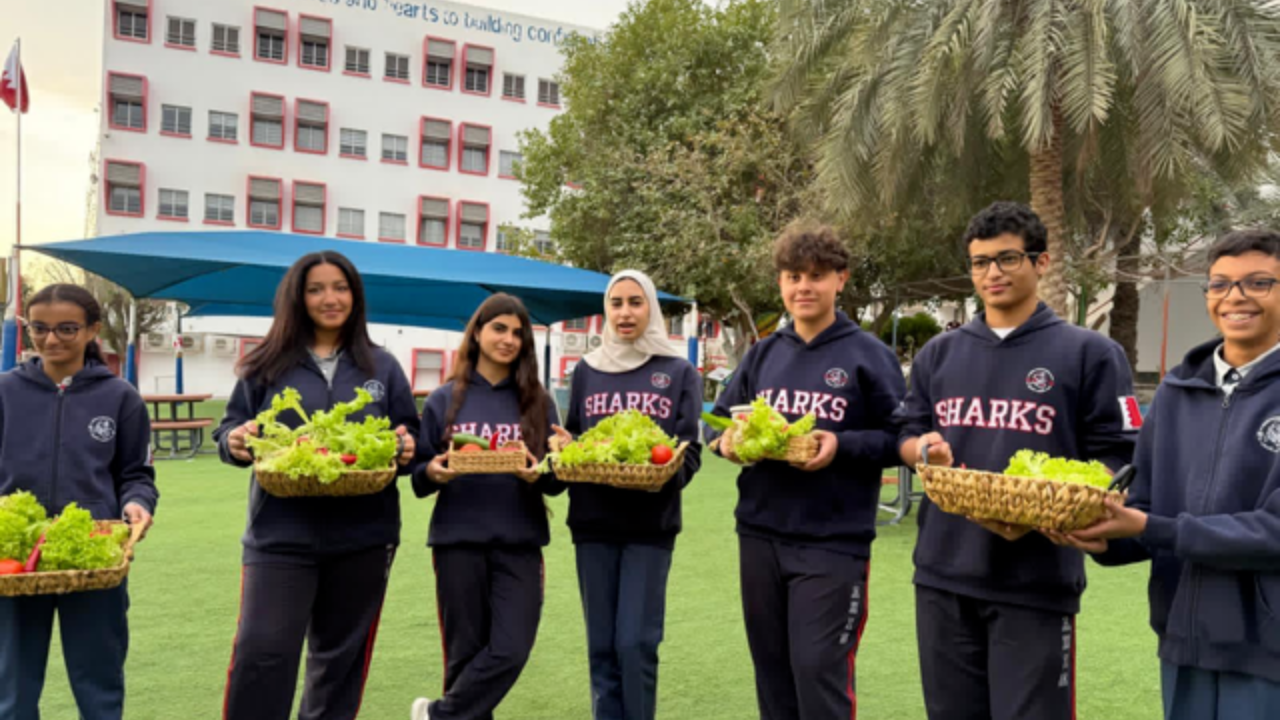
At AHIS, the physical environment is intentionally designed to support sustainability education. Central to this approach is the Permaculture Educational Garden, which serves as a dynamic learning space where students engage directly with sustainable practices.
Within this environment, students explore sustainable agriculture through hands-on engagement. They participate in planting, monitoring, and analyzing growth while applying key principles such as biodiversity, resource efficiency, and responsible land use.
The garden is complemented by a solar-powered greenhouse, where students investigate advanced agricultural methods including hydroponics, aeroponics, and vertical planting systems. These approaches expose learners to innovative, space-efficient, and resource-conscious solutions that address global challenges such as food security and sustainable food production.
A significant component of this ecosystem is the student-led composting initiative. Organic waste generated within the school is converted into nutrient-rich compost that supports the garden. Currently, this organic compost contributes to more than 70% of the garden’s needs, demonstrating a highly effective circular system.
This integrated model illustrates how educational institutions can transition from traditional consumption-based practices to regenerative systems. It provides students with a clear understanding of how sustainable solutions can be designed, implemented, and sustained over time.
Integrating Sustainability with Innovation and Entrepreneurship
Sustainability at AHIS extends beyond STREAM into the domains of business, innovation, and entrepreneurship. Students are encouraged to develop sustainable business concepts and design solutions that address real-world challenges.
This integration enables students to understand the intersection between environmental responsibility and economic viability. It reinforces the idea that sustainability can drive innovation and create opportunities for meaningful impact.
Students actively participate in local and international competitions, sustainability initiatives, and awareness campaigns. Through these engagements, they present their work, collaborate with diverse groups, and contribute to broader discussions on sustainability.
These experiences play a critical role in shaping global citizens who are aware of global challenges, engaged in their communities, and committed to contributing to positive change.
Establishing a Culture of Sustainability
For sustainability to be effective within education, it must be consistently embedded across all aspects of school life. It cannot be limited to individual projects or events.
At AHIS, sustainability is reflected in operational practices, decision-making processes, and community engagement. Initiatives such as waste reduction, environmental campaigns, and participation in national sustainability programs align with Bahrain’s broader vision for environmental responsibility.
Educators play a central role in sustaining this culture. They facilitate learning, model responsible practices, and guide students in applying knowledge to real-life contexts. The involvement of parents and the wider community further strengthens this approach, ensuring that sustainability extends beyond the school environment.
Preparing Students for a Sustainable Future
The future will require individuals who are capable of critical thinking, responsible decision-making, and sustainable innovation. Education systems must evolve to meet these expectations.
By aligning with global frameworks such as UNESCO and the UN Sustainable Development Goals, alongside regional sustainability strategies, schools can effectively prepare students to navigate and contribute to a complex and rapidly changing world.
At AHIS, sustainability is not simply embedded within the curriculum, it is embedded within the identity of the learner. It shapes how students think, how they approach challenges, and how they position themselves within an increasingly interconnected global landscape. By nurturing responsibility, innovation, and long-term thinking, students are empowered to move beyond awareness and into meaningful action, contributing to solutions that extend far beyond the classroom.
Education is not only about preparing students for the future, it is about equipping them to sustain it.
By Rasha Al Najjar
Assistant Principal
Al Hekma International School

Stay up to date
Subscribe to the free GESS Education newsletter and stay updated with the latest insights, trends, and event news every week. Your email address will remain confidential