The Power of Relationships: Why September Is About Connection Before Curriculum
Every September, schools come alive with anticipation. Freshly painted classrooms sparkle with carefully organised learning areas. Book corners are stocked with colourful stories waiting to be shared. Construction areas invite curious engineers, role-play corners are transformed into homes, cafés or veterinary clinics, and mathematics resources are neatly labelled, ready for exploration. Teachers spend weeks planning engaging learning experiences. Long-term curriculum maps are revisited, assessment schedules are finalised, and displays proudly showcase ambitious learning intentions. Yet, amidst all this preparation, there is one element that often determines whether all of those carefully designed plans succeed or fail. Relationships. Not worksheets. Not baseline assessments. Not phonics programmes. Not curriculum pacing. Just effective relationships.
In Early Years education, September should never begin with the question, "How quickly can we cover the curriculum?" Instead, it should begin with a far more important question: "How quickly can every child feel that they belong?"That subtle shift in thinking changes everything.
Children Learn Best When They Feel Safe
The first days of school can be overwhelming, even for adults. Imagine entering a completely unfamiliar building where nobody speaks to you by name. You don't know the routines, you are uncertain about expectations, and everyone around you seems more confident than you feel. This is precisely how many young children experience their first days in EYFS1 or Reception. Some arrive clutching a parent's hand so tightly that their knuckles turn white. Some enter confidently, only to burst into tears thirty minutes later when the excitement wears off. Others appear perfectly settled while quietly observing every interaction, trying to work out whether this new environment is emotionally safe. Before children begin learning letters and sounds, they are subconsciously asking themselves questions that are far more significant.
"Will somebody comfort me if I feel scared?"
"Will people listen when I speak?"
"Will someone play with me?"
"Do I belong here?"
These questions rarely appear on our planning documents, yet they shape every learning experience that follows. Neuroscience has repeatedly shown that children learn more effectively when they feel emotionally secure. When children experience high levels of stress, their brains prioritise survival rather than exploration. Curiosity decreases, language becomes limited, and problem-solving becomes more difficult. By contrast, when children feel safe, they become confident enough to investigate, communicate, take risks and persevere through challenges. Emotional security is therefore not separate from learning. It is the foundation of learning.
September Is Not Lost Learning Time
One of the most common concerns among educators is the pressure to "get started" with the curriculum immediately. There is understandable anxiety about covering objectives, completing baseline assessments and ensuring children make expected progress from the very beginning. However, this thinking sometimes creates a false choice between relationship-building and academic learning. The reality is that they are inseparable. When children build friendships in the block area, they are developing communication, collaboration and mathematical thinking. When they negotiate whose turn comes next on the climbing frame, they are strengthening emotional regulation and executive functioning. When they confidently explain their model to a trusted adult, they are developing expressive language and vocabulary. When teachers intentionally build relationships through play, the curriculum is already unfolding naturally. Connection is not time away from learning. Connection is how learning begins.
A Story from the Classroom
Last September, one little boy arrived every morning with visible anxiety. He stood silently at the classroom entrance, refusing to let go of his father's hand. He avoided eye contact with adults. If another child approached him, he would quietly step backwards. Many schools might have encouraged him to join the morning activity immediately. Instead, his teacher chose something different. Every morning she welcomed him with exactly the same calm smile. She remembered that his father had mentioned his fascination with vehicles. Before he arrived, she placed a basket of construction vehicles beside the entrance. She never pressured him to speak. She simply sat beside him and rolled a toy digger backwards and forwards across the carpet. Some mornings, they played together in complete silence. For almost two weeks, there was no expectation that he would complete an activity sheet, join whole-class teaching or participate in group discussions. The goal was much simpler. To help him believe that school was a place where adults could be trusted. Gradually, tiny changes began to appear. He smiled. He accepted an invitation to build with another child. He began saying "good morning." One morning he walked into class without holding his father's hand. A few weeks later, he proudly volunteered to show the class the bridge he had built from wooden blocks. Academically, nothing extraordinary had happened. Emotionally, everything had changed. And because everything had changed emotionally, learning accelerated naturally.
Relationships Are Built Through Ordinary Moments
When educators think about relationship-building, they sometimes imagine elaborate wellbeing programmes or carefully planned transition projects. In reality, relationships are rarely built through extraordinary events. They grow through hundreds of seemingly insignificant interactions.
- Greeting every child by name.
- Remembering who loves dinosaurs.
- Knowing who prefers drawing before talking.
- Sitting beside a child rather than standing over them.
- Sharing genuine laughter during outdoor play.
- Listening carefully without rushing to correct every mistake.
- Celebrating effort rather than perfection.
These moments often last only seconds. Yet together they communicate one powerful message: "I notice you." "I value you." "You belong here."
Children rarely remember every lesson we teach. They always remember how adults made them feel.
The Hidden Curriculum of Relationships
Every classroom teaches two curricula. The first is the planned curriculum--Literacy-Phonics, Reading, Mathematics, Communication and Language, Understanding the World, Expressive Arts and Design, Physical Development.
The second curriculum is invisible. It is communicated through every interaction. Do children feel respected? Are mistakes welcomed? Do adults genuinely listen?Are children's ideas valued? Can children take risks without fear of embarrassment? This hidden curriculum often determines whether the planned curriculum succeeds. Children who trust their teachers become willing learners. They attempt difficult challenges because they know mistakes are accepted. They ask questions because they know their voices matter. They recover from setbacks because supportive relationships provide emotional security. Learning becomes something they do with adults rather than something done to them.
Parents: The Child's First Teacher
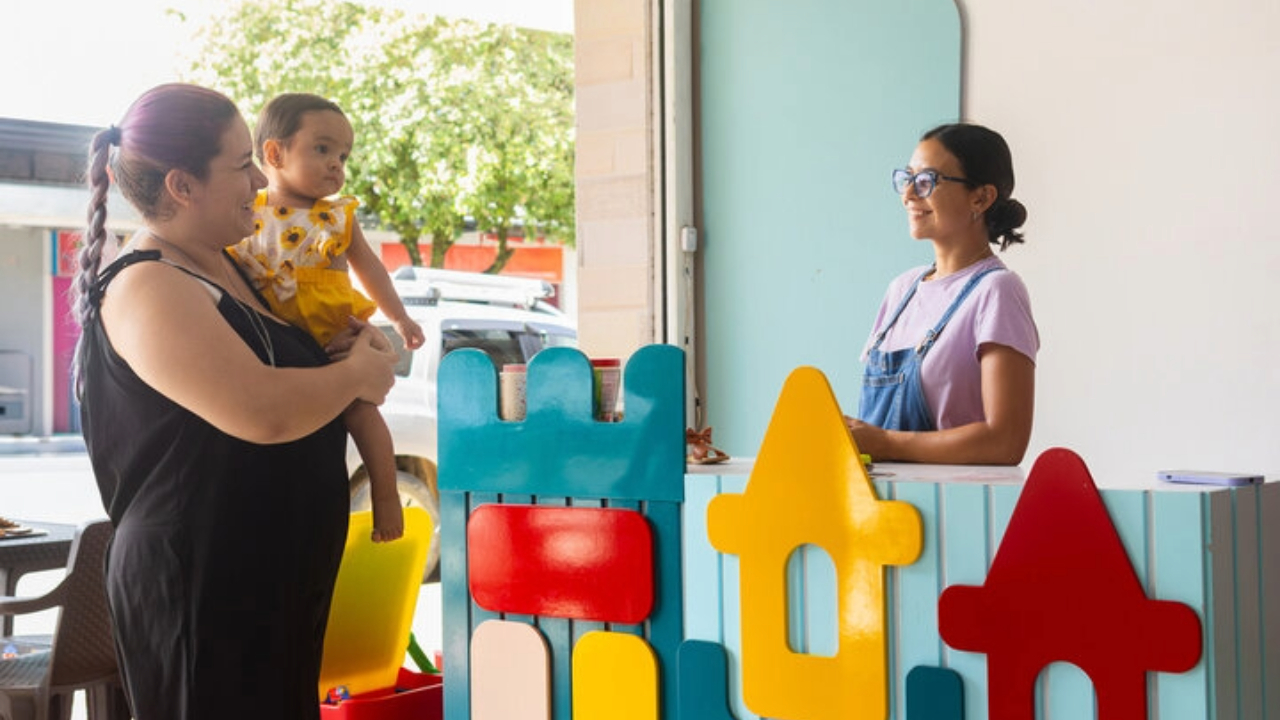
September is not only about building relationships with children. It is equally about building partnerships with families. Parents hand over far more than their child's school bag on the first day. They hand over trust. Many are experiencing their own anxieties. Will my child make friends? Will somebody comfort them if they cry? Will their teacher understand who they really are? At our school, we introduced informal "Getting to Know You" conversations during the first week. Rather than focusing solely on medical information or emergency contacts, teachers asked questions that revealed the child's identity.
- "What makes your child laugh?"
- "What comforts them when they feel upset?"
- "What are they fascinated by?"
- "What family traditions are important to you?"
The answers transformed classroom practice. One child loved baking with her mother every weekend. Our home corner soon included measuring spoons, recipe cards and mixing bowls. She naturally became the "expert baker," proudly teaching other children how to pretend to make cupcakes. Another child spoke very little English but adored singing songs from home. His family shared recordings, which we occasionally played during transition times. His confidence blossomed because part of his identity had been welcomed into the classroom. These small adaptations communicated something profound. Your family matters here.
Observation Before Assessment
September often brings pressure to complete baseline assessments quickly. While assessment has an important place, relationships allow observations to become significantly richer. Children reveal their true capabilities only when they feel secure. A child who appears reluctant during formal assessment may later demonstrate advanced mathematical thinking while building with loose parts.
Another may say very little during carpet sessions but confidently narrate elaborate stories during role play. Without relationships, assessment risks measuring confidence instead of competence. The strongest Early Years practitioners know that meaningful observation begins with knowing the child first.
The Leadership Challenge
School leaders understandably monitor curriculum coverage, assessment completion and progress data during September. These are important. But perhaps leadership conversations should also include different indicators.
- Do children smile when they arrive?
- Do teachers know something unique about every child?
- Are parents beginning to trust the school?
- Can children confidently seek comfort from adults?
- Do classrooms feel calm, joyful and emotionally secure?
These questions may appear less measurable. Yet they are often stronger predictors of successful learning than any early assessment score. Culture begins with relationships.
Looking Beyond September
The investment made during those first few weeks continues paying dividends throughout the academic year. Children who begin the year feeling emotionally secure often demonstrate greater resilience when learning becomes challenging. They are more willing to tackle unfamiliar tasks. They collaborate more effectively with peers. They regulate their emotions more successfully. They recover from setbacks more quickly. Most importantly, they develop confidence in themselves as capable learners. Teachers also benefit. Behaviour challenges reduce because children understand expectations through trusting relationships rather than fear of consequences. Parents communicate more openly because partnerships have been established from the beginning. Teaching becomes more responsive because educators truly know the children in front of them.
A Final Reflection
As educators, we often ask ourselves at the end of September: "Have I taught enough?" Perhaps a more meaningful question is this: "Have I connected enough?"
Because when children feel known, valued and emotionally safe, the curriculum does not need to compete with relationships. It grows through them. Years from now, most children will not remember the first letter sound they learned. They may not remember the number they counted to in September. But many will remember the teacher who waited patiently beside them while they found the courage to walk through the classroom door. They will remember the smile that greeted them every morning. They will remember the adult who noticed when they were quiet. They will remember the classroom where they felt they belonged. That is the true power of relationships. And perhaps the greatest lesson Early Years teaches us is this: Before children can believe in learning, they must first believe that someone believes in them.
By Remediana Dias
Stay up to date
Subscribe to the free GESS Education newsletter and stay updated with the latest insights, trends, and event news every week. Your email address will remain confidential