Real-World Stories That Spark Student Curiosity and Connection in EYFS
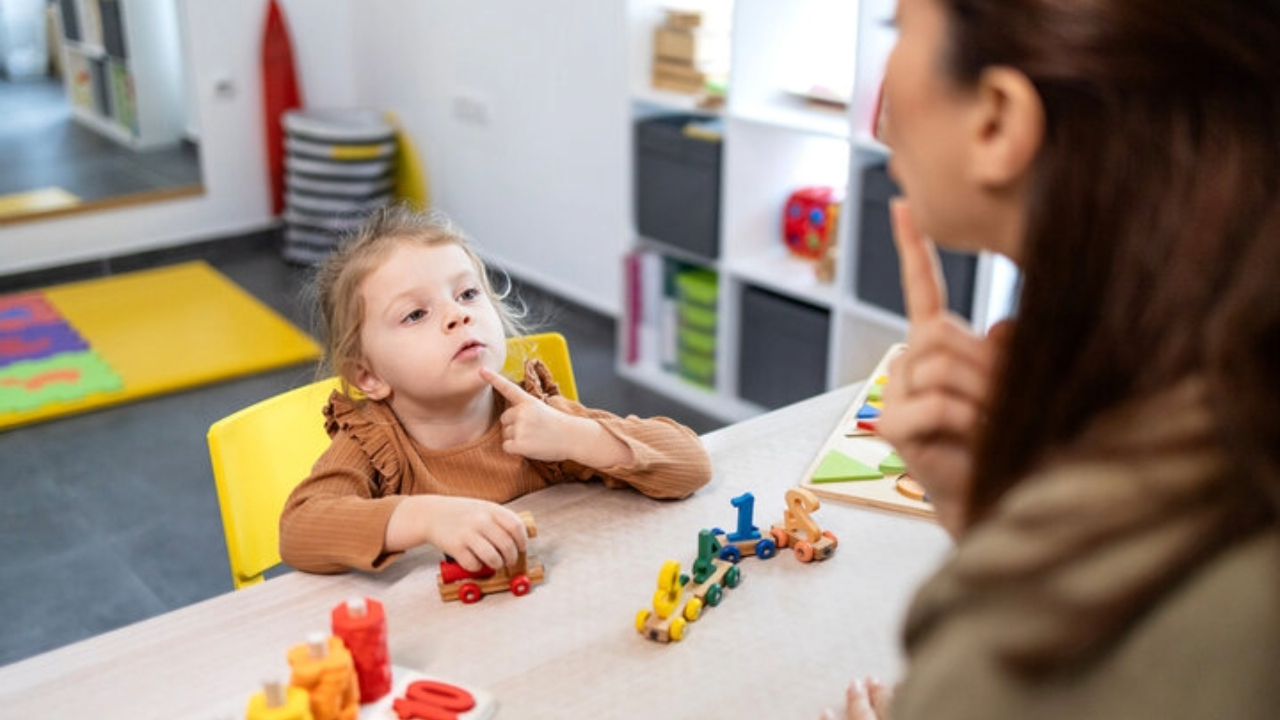
In the Early Years Foundation Stage (EYFS), children learn through the lens of lived experience. They are not passive recipients of information — they are meaning-makers, constantly interpreting the world through touch, movement, conversation, and emotional connection. When educators harness this natural inclination by using real-world stories, learning becomes more than an activity; it becomes a shared journey of discovery. Real-world stories transform ordinary moments into extraordinary learning opportunities. They anchor abstract concepts in concrete experiences, making learning memorable, relevant, and deeply engaging. In EYFS, where curiosity is the engine of development, these stories become the heartbeat of a responsive, child-centered curriculum.
What Are Real-World Stories in EYFS?
Real-world stories are authentic narratives drawn from children’s immediate environment. They are not scripted or pre-planned; they emerge organically from:
- spontaneous classroom events
- outdoor discoveries
- children’s questions and observations
- family experiences shared from home
- community interactions
- unexpected moments that capture children’s attention
These stories evolve naturally. A dropped ice cube, a lost shoe, a bird nesting near the playground — each becomes a narrative thread that children follow, question, and explore.
Unlike fictional tales, real-world stories are grounded in truth. This authenticity gives them emotional weight and cognitive relevance. Children recognise themselves in the story, which strengthens engagement and ownership.
Why Real-World Stories Matter in Early Learning
Research in early childhood education emphasises that young children learn best when learning is: contextualized, hands-on, emotionally meaningful and connected to their lived experiences. Real-world stories support this by: rooting learning in familiar, relatable contexts, encouraging children to observe, question, and hypothesise, promoting sustained shared thinking, providing authentic reasons to communicate and weaving together multiple areas of learning naturally. Most importantly, real-world stories position children as active investigators rather than passive learners. They become protagonists in their own learning narrative.
Real-World Story Examples and Their Impact on Curiosity
Below are some EYFS-rich examples that show how everyday moments become powerful learning catalysts.
1. The Broken Toy Investigation
A child arrives with a toy car that no longer moves. Instead of fixing it, the teacher turns the moment into inquiry: “Ali’s car has stopped working. What do you think might have happened?” Children gather around, touching the wheels, comparing it to other cars, and offering theories: “Maybe the wheel is too tight.” “It needs more push.” “Something is stuck inside.” Some children test slopes to see if gravity helps. Others draw diagrams of how cars move. The impact is highly sparked curiosity with early engineering thinking, problem-solving, prediction, and collaborative reasoning clearly visible.
2. The Ant Trail Discovery
During outdoor play, children notice a line of ants carrying crumbs. The teacher kneels beside them: “They’re all going the same way. What do you think they’re trying to do?” Children follow the trail, discovering a tiny hole near the fence. They begin to: sketch the ants, count how many pass in a minute, compare sizes and ask questions about teamwork and survival. This single moment becomes a week-long inquiry into living things. There is scientific observation, pattern recognition, early biology, and empathy for living creatures developed through this activity.
3. The Rainwater Challenge
After a heavy rainshower , a puddle forms in the outdoor area. Instead of draining it, the teacherposes a challenge: “The water is stuck. How could we help it move?” Children experiment with: pipes, cups, sticks, sand and leaves. They test gradients, build channels, and negotiate roles. Some children record their attempts; others compare which materials work best. This activity has sparked curiosity and physics of water flow, teamwork, trial-and-error, and environmental awareness, all are clearly visible.
4. The Missing Snack Investigation
A day before, the teacher mentioned to the students that she will getting 30 strawberries and giving equal number of strawberries to the children during snack time at each of the three big round tables in the class. She asks the table leader to pick the strawberries for each table. During snack time, children notice fewer strawberries than expected. The teacher asks: “We had 30 strawberries this morning. Now there are fewer. What could have happened?”
Children begin: recounting who took strawberries, counting leftovers, drawing tally marks and creating simple charts. Some suggest animals may have taken them; others propose sharing rules. A simple snack time investigation activity sparks mathematical reasoning, data handling, memory recall, and logical thinking.
5. The Travel Suitcase Story
A child brings a suitcase from a family trip. Instead of simply sharing, the teacher turns it into a class inquiry: “Where do you think this suitcase has travelled? What clues can we find?” Children explore:clothing, tickets, souvenirs, maps and photos. They create role-play airports, write boarding passes, and share their own travel stories. This activity promotes cultural awareness, expressive language, geography, and imaginative play.
How Real-World Stories Foster Curiosity and Connection
1. They Create Emotional Engagement
Children care more when the story involves: their friends, their belongings, their environment and their experiences. This emotional connection fuels motivation and sustained attention.
2. They Promote Inquiry Over Instruction
Educators shift from telling to asking: “What do you notice?” “Why do you think that happened?” “How could we find out more?” This empowers children to think critically and independently.
3. They Encourage Sustained Shared Thinking
Real-world stories often unfold over days or weeks. Children revisit ideas, refine theories, and build deeper understanding.
4. They Integrate Lea Learning Across Domains
A single story can touch:
Numeracy: counting, measuring, comparing
Literacy: storytelling, explanation, vocabulary
Science: observation, prediction, experimentation
PSED: collaboration, empathy, turn-taking
Expressive Arts: drawing, role-play, model-making
This mirrors how learning naturally occurs in life.
5. They Build a Culture of Curiosity
When children see that their ideas and discoveries shape the curriculum, they begin to view the world as a place full of questions worth exploring.
The Role of the Teacher :
In this approach, the teacher becomes:
Observer — noticing the spark of curiosity
Facilitator — extending thinking through questions
Curator — providing materials and provocations
Documenter — capturing the learning journey
Co-learner — exploring alongside children
This aligns with high-quality EYFS practice: responsive, relational, and rooted in play.
Real-world stories transform the EYFS classroom into a living, breathing curriculum. They honour children’s natural curiosity and turn everyday moments into rich learning adventures. When educators value these authentic experiences, they ignite a lifelong love of inquiry. In such environments, children don’t just learn about the world — they learn from it, with it, and through it.
By Remediana Dias
Remediana Dias is an educator and Head of Early Years Foundation Stage in a UK National Curriculum School in Dubai. She is the author of the book—Understanding Dyslexia. She is the founder of the NGO--Vision Education Society in Goa. In 2020, she was recognized with the Indian Achievers Award for her contribution to education. She has been an active speaker on topics related to early years education at GESS Education in Turkey, Dubai and Saudi, at the Middle East School Leaders Conference in Dubai and at the Annual English Conference in Jordan by Queen Rania Teaching Academy.
Stay up to date
Subscribe to the free GESS Education newsletter and stay updated with the latest insights, trends, and event news every week. Your email address will remain confidential