Smashing Stereotypes: Giving Every Child a Fair Start in Science in the Early Years
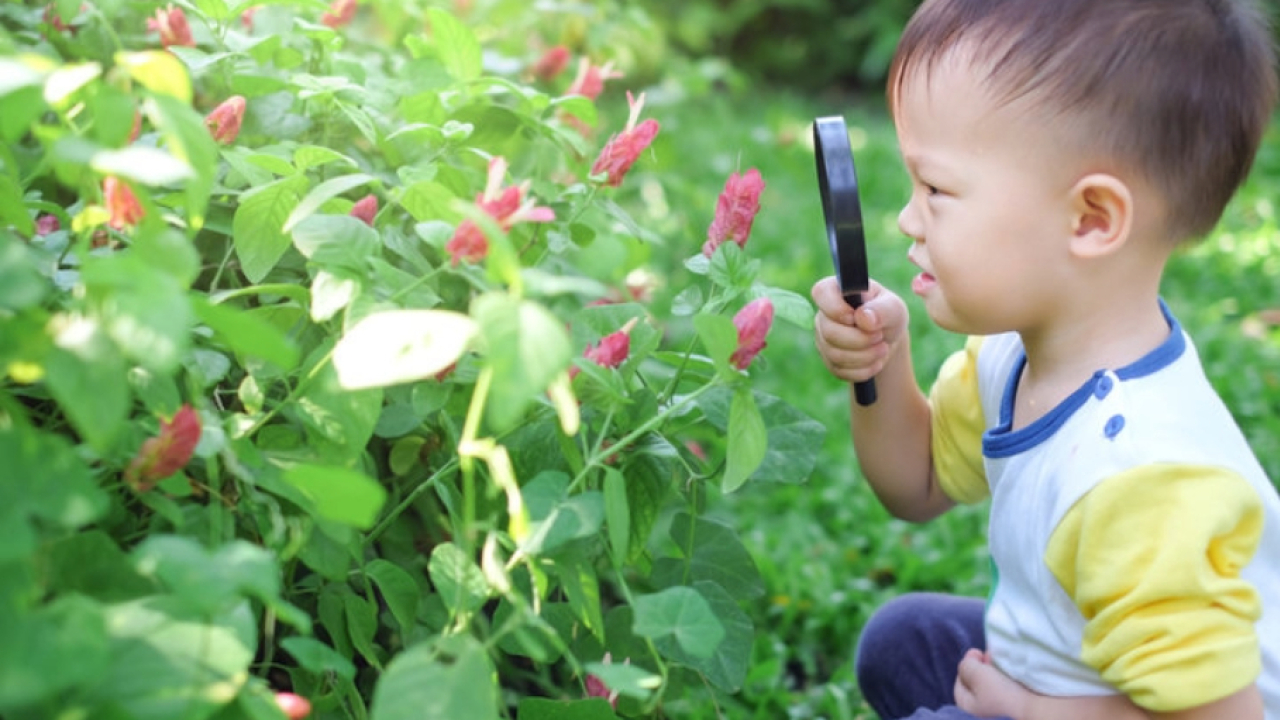
Science in the early years is not about lab coats, complex experiments, or memorising facts. It is about curiosity, wonder, questioning, and making sense of the world. It happens when a child asks why water disappeared in the sand, why shadows move, or why some objects float while others sink. It happens when they poke a tiny minibeast, mix sand with water, or try to balance a block on top of a wobbly tower.
Yet, despite this natural fit with how young children learn, stereotypes about who “belongs” in science often begin far earlier than we realise. If left unchallenged, these assumptions can quietly shape children’s confidence, interests, and future aspirations—long before they have had a genuine chance to discover what science really is. The early years are a critical window. What children experience, see, and hear during this time can either open doors or place invisible limits on what they believe is possible for them.
Stereotypes in science are rarely taught directly. Instead, they seep in through every day experiences. For example:
- Storybooks may repeatedly show scientists as white men with wild hair and goggles.
- Posters might show boys building rockets while girls watch.
- Toys marketed as “STEM kits” often feature boys on the packaging.
- TV shows may portray inventors as eccentric men and helpers as women.
A child who never sees someone “like me” represented as a scientist may unconsciously decide that science is not meant for them.
Language that sends subtle messages--comments such as:
- “Boys love building.”
- “Girls are good at looking after things.”
- “Let’s ask the clever ones.”
- “Be careful, that’s too tricky for you.”
These may seem harmless, but over time they send powerful messages about who is expected to succeed in problem‑solving and investigation.
Even well‑intentioned routines can unintentionally exclude:
- If construction is encouraged mainly with boys, they get more experience with engineering concepts.
- If girls are praised more for neatness or care, they may avoid messy, exploratory play.
- If quieter children are not invited into discussions, they may assume science requires confident talkers.
- If children with additional needs are given simplified tasks, they may miss out on rich scientific thinking.
Research shows that children begin forming ideas about ability and identity at a very young age. By primary school, some already associate science, maths, and problem‑solving with particular genders, cultures, or “naturally clever” children. This can result in:
- Some children stepping forward confidently.
- Others quietly stepping back.
- Some avoiding challenges for fear of being “wrong”.
- Others believing they are “not a science person”.
The encouraging news is that, in the early years, these patterns are still flexible. With thoughtful practice, educators have a powerful opportunity to disrupt stereotypes before they become fixed beliefs. Young children are natural scientists. They test ideas constantly:
- Dropping objects to see what happens.
- Mixing materials to observe changes.
- Watching insects and animals.
- Asking endless “why” questions.
- Repeating actions to confirm patterns.
When a toddler fills and empties containers in the water tray, they are exploring capacity. When a child builds a tower and adjusts it so it doesn’t fall, they are experimenting with balance and stability. When children argue about whose paper aeroplane flies further, they are testing variables like shape and force. A fair start in science does not mean formal lessons. It means recognising these moments as scientific thinking and valuing them for every child.
For example:
- A child with limited verbal language might show scientific thinking through careful observation or repeated actions.
- A child learning English might understand cause and effect perfectly, even if they cannot yet explain it fluently.
- A child with additional needs might show deep curiosity through sensory exploration.
- A child who prefers solitary play might conduct long, focused investigations without needing adult direction.
When educators notice, name, and celebrate these moments, children begin to see themselves as capable thinkers. Praising effort and strategies rather than fixed ability helps children develop a growth mindset.
Instead of:
- “You’re so clever.”
Try:
- “You tried lots of ways until it worked.”
- “You kept going even when it was tricky.”
- “You noticed something important.”
Questions such as:
- “What do you notice?”
- “What do you think might happen next?”
- “How could we find out?”
- “What else could we try?”
- “What makes you think that?”
These questions have no single correct answer, reducing pressure and encouraging participation. Even small shifts in language can make science feel inclusive rather than exclusive.
In the early years, science is everywhere—often hiding in plain sight. Inclusive practice means recognising these opportunities and ensuring all children can access them.
During water play, children can:
- Explore floating and sinking.
- Test which containers hold more.
- Observe how water changes materials (sand, paper, fabric).
- Experiment with speed by pouring water through tubes.
During outdoor play children can:
- Observe weather changes.
- Compare shadows at different times of day.
- Investigate soil, rocks, and insects.
- Explore forces by rolling balls down slopes.
During construction play children can:
- Build bridges and test their strength.
- Create ramps and explore speed.
- Experiment with balance and symmetry.
- Use loose parts to design inventions.
During cooking or snack time, children can:
- Mix ingredients and observe changes.
- Explore melting, freezing, dissolving.
- Compare textures, smells, and temperatures.
- Predict what will happen when food is heated or cooled.
During gardening children can:
- Plant seeds and observe growth.
- Compare how plants respond to light or water.
- Investigate soil types.
- Explore lifecycles through real experiences.
During other playtime opportunities children can explore:
- Bath time bubbles (air, surface tension).
- Playdough (materials changing).
- Magnet play (forces).
- Music and sound exploration (vibration, pitch).
- Ice play (states of matter).
Inclusive science experiences are open‑ended. They:
- Encourage collaboration rather than competition.
- Value drawings, gestures, models, and photographs as much as spoken explanations.
- Provide support for children who communicate differently.
- Allow children to explore at their own pace.
- Celebrate multiple ways of showing understanding.
When science is embedded in play and daily routines, it becomes accessible, meaningful, and joyful. Children learn as much from who educators are as from what they teach. When adults show curiosity—wondering aloud, asking questions, and admitting when they don’t know the answer—children learn that science is about exploration, not perfection. For example:
- “I wonder why that leaf is floating. What do you think?”
- “I didn’t expect that to happen. Let’s try again.”
- “I’m not sure why the tower fell. How could we test it?”
Families play a vital role in shaping children’s attitudes toward learning and science. Many adults may not see everyday activities as “science,” but simple experiences at home can make a big difference.
Ideas to share with families:
- Talk about why ice melts.
- Wonder where rain comes from.
- Fix something together and discuss how it works.
- Sort laundry by size, colour, or material.
- Compare which fruits sink or float in a bowl of water.
- Watch the moon over several nights and notice changes.
- Grow herbs on a windowsill.
- Explore shadows using a torch.
Celebrating children’s investigations with families through:
- Photos.
- Learning stories.
- Displays.
- Short videos.
- “Ask me about…” notes.
This reinforces the message that science is not a special subject for a select few. It is a way of understanding the world that belongs to everyone. Smashing stereotypes in early science is not about pushing children toward future careers or academic outcomes. It is about keeping possibilities open. It is about ensuring that no child decides “science isn’t for me” before they have truly had the chance to explore it. When we give every child a fair start in science in the early years, we are not just teaching them about materials, plants, or change. We are teaching them that their curiosity matters, their questions are valued, and their place in the world of ideas is secure. And that may be the most powerful lesson of all.
By Remediana Dias
Stay up to date
Subscribe to the free GESS Education newsletter and stay updated with the latest insights, trends, and event news every week. Your email address will remain confidential