From Dependence to Agency: Protecting the Most Critical Developmental Transition in Early Childhood (Ages 3-6)
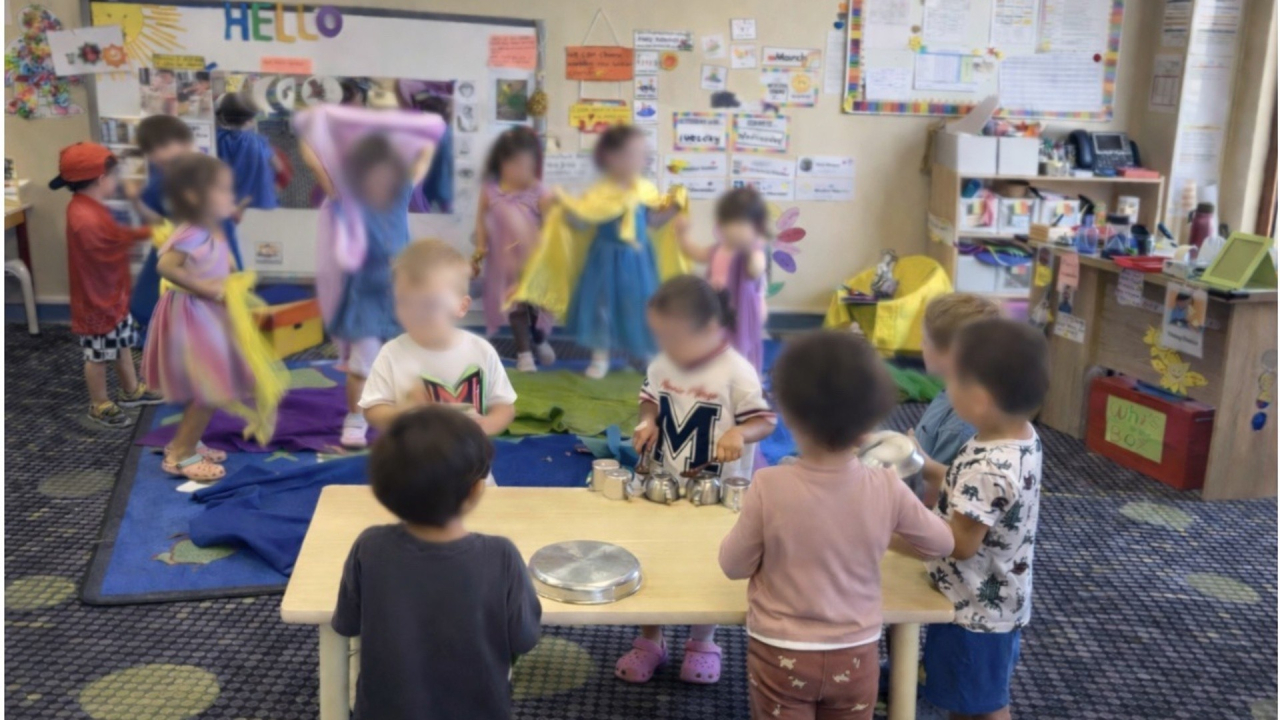
Agency in Action - When the teacher steps back, creativity steps forward, allowing children’s ideas to flourish through exploration, collaboration, and transformation of their environment.
Introduction: The Transition That Shapes the Learner
Between the ages of three and six, children move through one of the most important developmental transitions of their lives. They begin shifting from complete dependence on adults toward growing independence, initiative and participation in the world around them. At the heart of this transition lies a fundamental developmental capacity: Agency, which is the child’s ability to act intentionally within their environment and initiate ideas.
Early childhood education is not about giving children something they lack. It is about protecting and
nurturing the capacities already unfolding within them. During this period, children are not simply acquiring information. They are developing the foundation of who they will become as learners; individuals who ask questions, explore ideas, collaborate with others and act with confidence in their environment. This transition is delicate. It can either be protected and nurtured, or it can be unintentionally interrupted when early childhood environments focus primarily on visible outcomes, products, or environments that prioritize predefined goals rather than responding to children’s emerging ideas. Through close observation of children aged three to four, early childhood education reveals itself as something deeper than the delivery of knowledge.
Agency in Early Childhood
Agency refers to the child’s ability to act intentionally within their environment; to make decisions, initiate ideas, explore possibilities and influence the world around them. Young children enter the classroom already full of curiosity and initiative. They observe, question, invent and experiment
constantly. The role of early childhood education is not to replace these natural processes with instruction, but to create environments where they can grow stronger.
When children experience agency, they begin to see themselves as capable participants in their own
learning. They become more confident in their thinking, more willing to take intellectual risks and more motivated to engage deeply with learning. In this sense, early childhood education is not primarily about preparing children for learning in the future. Rather, it begins with recognizing that young children are already active learners. The role of early childhood education is therefore to protect and nurturer the
developmental conditions that allow their natural curiosity and thinking to unfold.
A Different Presence of the Teacher
Supporting agency requires a different kind of teacher presence. Rather than directing each step of children’s actions, the teacher becomes a careful observer and facilitator. The teacher watches for emerging ideas, listens to children’s conversations and introduces materials or questions that allow those ideas to grow. This does not mean the classroom lacks structure. Boundaries remain clear, children learn to respect materials, care for shared spaces and consider the presence of others. Within those boundaries; however, the classroom becomes a place where children’s thinking can expand. In this environment, the teacher’s role shifts from controlling learning to nurturing the conditions in which learning unfolds.
How Agency Becomes Visible
Agency in early childhood does not appear as a single behavior. It reveals itself through moments where
children take initiative, collaborate with peers and reinterpret the materials within their environment. Materials that were initially introduced for one purpose often begin to acquire new meanings as children experiment with them. Combine them with other resources and move them across different areas of the classroom. Through this process, materials shift from being tools prepared the adult to becoming
instruments through which children investigate ideas, construct understanding, and extend their thinking.
In my classroom, these moments often emerge unexpectedly. During one exploration, children were
investigating magnets and metal containers. Rather than following a predetermined procedure, they began testing different objects, moving around the room to collect additional materials and comparing their discoveries with one another. What began as simple exploration of magnetic attraction gradually expanded into collaborative investigation.
In another moment, a child began producing rhythmic sounds using metal container. Soon, other children
joined, transforming objects into musical instruments. Bottles filled with loose parts became rattles, metal cups became drums, fabrics were gathered to create performance. The classroom in that moment transformed into a collective musical experience initiated entirely by the children themselves.
These moments are not planned outcomes. They are examples of how learning unfolds when children are trusted with agency while being supported by an environment and educators that allow their ideas to develop.
The Classroom as a Living Environment
When agency is supported, the character of the classroom begins to change. The environment becomes less like a place where activities are delivered and more like a living system shaped by children thinking. Materials become resources for exploration rather than instructions to follow. Spaces remain flexible and open to reinterpretation. Children move between areas, combine objects in new ways and collaborate spontaneously with peers. In such environments, learning emerges through interaction with materials, space and other children. Through these encounters, the classroom gradually evolves into dynamic
environment that reflects children’s ideas, questions and imaginative possibilities.
Why This Developmental Transition Matters
The years between three and six are not simply preparation for formal schooling. They represent a critical developmental period in which children begin forming the dispositions that will shape their future learning.
Through experiences of agency, children practice capacities that later support academic learning, including: curiosity, problem solving, persistence, collaboration, and growing confidence in their thinking. When children repeatedly encounter environments where their ideas matter and their actions influence the world around them, they begin to see themselves as capable learners who can participate
actively in the learning process.
Agency and Saudi Vision 2030
In the context of Saudi Vision 2030, education in Saudi Arabia increasingly emphasizes the development
of capable, confident, and adaptable learners who can contribute meaningfully to society. Protecting
agency in early childhood aligns directly with this vision.
When young children at this critical age are given opportunities to explore, initiate ideas, collaborate
with peers and act independently within thoughtful prepared environments, they begin developing the dispositions that future learning and innovation depend on.
By focusing on agency, responsibility, and curiosity during early years, early childhood education contributes to the broader national goal of nurturing individuals who are prepared to think independently, participate responsibly, and contribute meaningfully to society.
Conclusion
Early childhood education carries a profound responsibility. During these formative years, children are developing the foundations of their identity as learners. What children practice repeatedly during this period gradually shape how they come to see themselves in relation to learning, exploration, and participation in the world around them. When children’s experiences are largely defined by instructions and predetermined outcomes, they learn to wait for direction. By contrast, when their experiences allow
them to explore, question, collaborate, and transform their environment, they begin to understand that their ideas matter and that they are capable of contributing meaningfully to the learning process.
Protecting children’s agency during this critical developmental transition is one of the most important responsibilities early childhood education carries.
By Maisa Almatrafi
Early Childhood Educator (Ages 3-4)
Building Blocks-KAUST
Stay up to date
Subscribe to the free GESS Education newsletter and stay updated with the latest insights, trends, and event news every week. Your email address will remain confidential