Beyond the Score: Is Every Student Moving Forward?
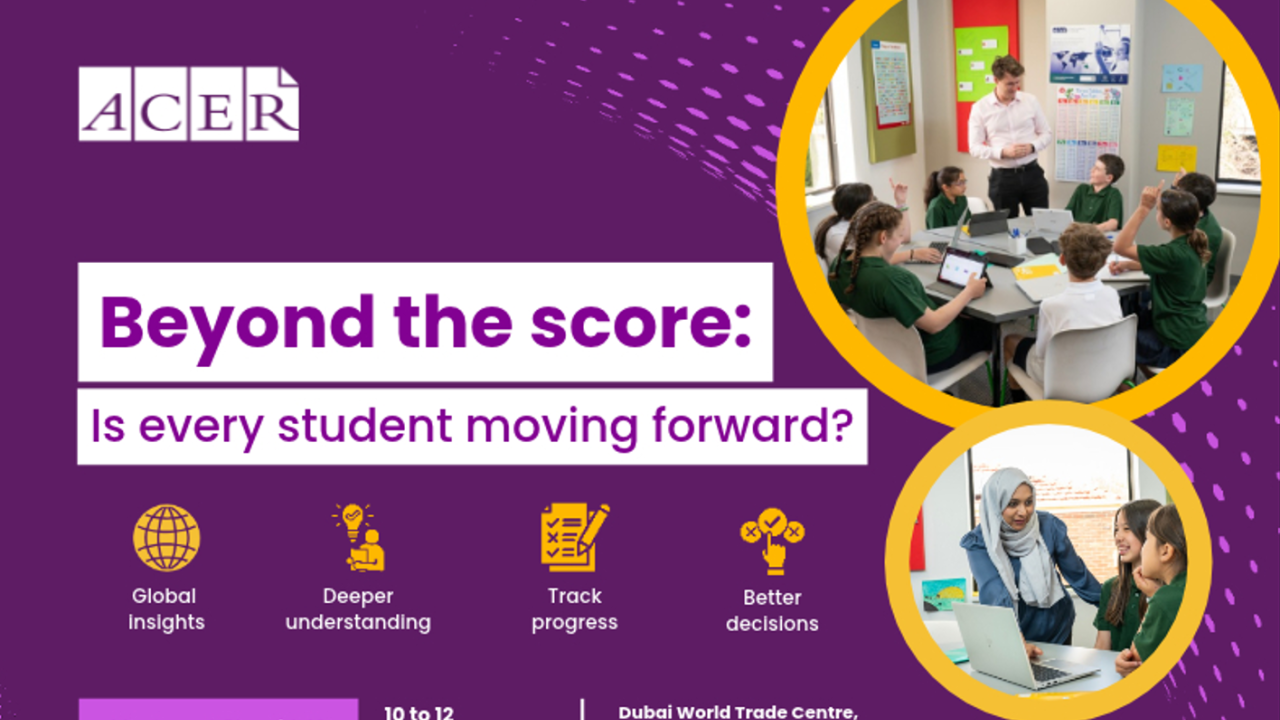
Why the latest PISA findings should change the way schools think about assessment
There is a moment every school leader knows well. Assessment results arrive, reports are opened, and the first questions are usually the same. How did our students perform? Are we above the international average? How do we compare with other schools?
These are important questions. But perhaps there is a more important one we should be asking: What have our students actually learned, and where do they need to go next?
The results of PISA 2025, released by the OECD in September 2026, make this question particularly relevant.
More than 760,000 students across 91 countries and economies participated in the assessment. The findings reveal a concerning picture. Across OECD countries, average reading performance fell by approximately 14 points between 2022 and 2025, while mathematics declined by around nine points. Science performance remained broadly stable.
Perhaps most concerning are the challenges surrounding higher-order reading skills, particularly students' ability to evaluate information, connect ideas across different sources and think critically about what they read.
The Australian Council for Educational Research (ACER), which led the international development and implementation of PISA 2025 on behalf of the OECD, has spent more than 95 years researching how learning happens and how it can be measured meaningfully.
And if there is one lesson that international assessments consistently reinforce, it is that understanding performance is only the beginning.
The real value lies in what we do with that understanding.
Attainment tells us where students are. Progress tells us how far they have come.
Schools today have access to more assessment data than ever before. Yet having more data does not necessarily mean having a better understanding of learning.
Consider two students in the same classroom.
One consistently achieves high marks but has made very little measurable progress over the past year. Another may still be performing below grade-level expectations but has made substantial gains in understanding and ability.
If we look only at attainment, we may celebrate the first student and worry about the second.
But are we seeing the complete picture?
Both students deserve our attention. One may need greater challenge to continue growing. The other may be making significant progress that deserves recognition and further support.
This distinction between attainment and progress is fundamental to meaningful assessment.
Attainment tells us where a student is performing at a particular point in time, often against an established expectation or benchmark. Progress tells us how their learning has developed over time.
Neither measure should stand alone.
For school leaders, this distinction can change how success is understood. Strong average results are encouraging, but they do not necessarily mean every student is progressing. Equally, a school with more modest attainment results may be achieving significant improvements in learning.
For teachers, the questions become even more practical.
Can a student locate information in a text but struggle to draw an inference? Can they carry out a mathematical procedure but find it difficult to apply the same concept to an unfamiliar problem? Do they understand a scientific principle but struggle to interpret evidence?
These are the insights that make a difference in classrooms.
When assessment identifies the skills students have developed, the concepts they are struggling with and the next stage of learning, teachers can respond with greater precision.
Assessment should not simply tell us what students know today. It should help us decide what to teach tomorrow.
And when schools can measure progress on a consistent scale over time, the conversation shifts from comparing marks to understanding growth.
Turning assessment evidence into meaningful classroom action
This philosophy is at the heart of ACER's International Benchmark Tests (IBT).
Developed through ACER's extensive research in educational measurement and progressive achievement, IBT helps schools understand where students are in their learning, how they compare with relevant international benchmarks and how their learning is developing over time.
Designed for students in Grades 3 to 10, IBT assesses English, Mathematics, Science, Reasoning and Arabic, with assessment options suited to the different learning needs of international and private schools.
Its adaptive assessment pathways provide students with test questions matched more closely to their demonstrated levels of ability, creating opportunities to understand learning across a broader range of achievement.
But the real value of IBT comes after students complete their assessments.
Through comprehensive, instantly available diagnostic reporting, teachers and school leaders can explore student performance at individual, classroom and school levels.
Rather than receiving only an overall score, teachers can examine performance across specific skills and subject strands, identify areas requiring attention and plan appropriate learning activities.
Imagine a Year 7 English department reviewing its assessment results.
The overall attainment figures appear reasonable. However, a closer examination reveals that while many students can retrieve information from a passage, they are less confident when required to interpret meaning, evaluate evidence or draw conclusions.
That is a far more useful starting point for teaching than simply knowing the class average.
It allows teachers to adjust instruction, design targeted learning activities and revisit those skills in subsequent assessments.
IBT also provides internationally benchmarked comparisons against participating student cohorts, helping schools understand performance in a broader context while recognising the different curricula and educational environments in which students learn.
Through common reporting scales and assessments conducted at different points in time, schools can also monitor learning progress rather than relying solely on isolated test results.
For school leaders, this brings another important dimension to school improvement. It becomes possible to examine not only whether students are meeting expectations, but whether teaching strategies and interventions are contributing to measurable growth.
For teachers, it provides clearer evidence to guide professional judgement.
For parents, it can support more meaningful conversations about their child's development, strengths and next steps.
Importantly, IBT is designed to complement national assessments and existing school-based testing, not replace them. Different assessments serve different purposes. The objective is to bring those perspectives together to develop a more complete picture of student learning.
Understanding the needs of schools in the Middle East
For more than two decades, ACER has worked alongside schools across the Middle East, supporting assessment, benchmarking and evidence-informed school improvement.
The region presents a particularly interesting educational environment. Within the UAE alone, schools deliver multiple international and national curricula, serve highly diverse student populations and operate within evolving regulatory expectations.
A single measure of attainment cannot always capture that complexity.
Our experience working with schools has reinforced something important: school leaders do not simply need more reports. They need information they can trust, understand and use.
And teachers need assessment evidence that connects with the reality of their classrooms.
That is why ACER's approach brings together rigorous assessment research, internationally informed measurement and practical reporting that supports educational decisions.
Alongside IBT, ACER offers the International Schools' Assessment (ISA), developed for international schools using frameworks from the OECD's PISA programme. ISA is a separate assessment and is neither part of PISA nor endorsed by the OECD.
Schools can also explore Progressive Achievement for International Schools (PAIS), which offers fixed and adaptive online assessments, including a free 30-day trial of PAIS Adaptive.
Let's talk about what comes after the results
At GESS Dubai, we invite school leaders and educators to visit ACER at Stand L40.
Come and explore how IBT can help your school move beyond scores and benchmarks to a clearer understanding of individual learning and measurable progress.
Because ultimately, the most important question is not simply how well students performed.
It is whether they are moving forward, and what we can do to help them go further.
Visit ACER at Stand L40, GESS Dubai.
Find out more at www.acer-ibt.org/ae/
Written by Aya Rajakaruna, General Manager, ACER Middle East
Stay up to date
Subscribe to the free GESS Education newsletter and stay updated with the latest insights, trends, and event news every week. Your email address will remain confidential