How Thoughtful Teaching and Modelling of Vocabulary Can Transform Children’s Outcomes in EYFS
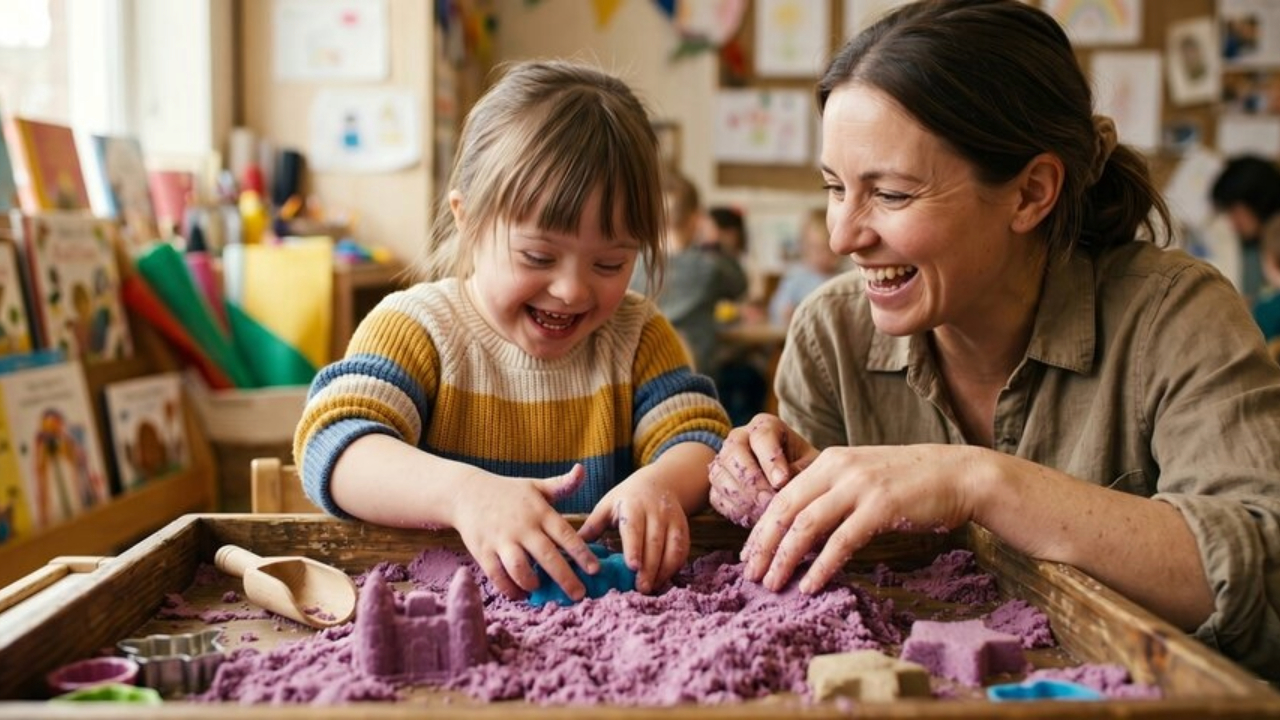
Vocabulary is the heartbeat of learning in the Early Years Foundation Stage (EYFS). It is through words that children interpret their world, form relationships, express emotions, and access every area of the curriculum. In Reception, where developmental differences can be vast, the thoughtful teaching and modelling of vocabulary is not simply beneficial — it is transformative. It shapes children’s academic trajectories, their confidence, and their capacity to thrive as learners.
Research consistently shows that vocabulary is one of the strongest predictors of later attainment. Children with a rich vocabulary are better equipped to:
- Understand stories and texts
- Express ideas in writing
- Engage in problem-solving
- Navigate social situations
- Regulate emotions
- Participate confidently in classroom dialogue
Conversely, children who enter school with limited vocabulary face an immediate disadvantage. Without intentional support, this gap widens over time, affecting reading comprehension, writing fluency, and overall cognitive development. Reception, therefore, becomes a powerful window of opportunity — a chance to intervene early, close gaps, and set children on a path of success.
High-quality vocabulary provision does not happen by accident. It is:
- Planned — with clear language goals
- Purposeful — linked to meaningful experiences
- Consistent — modelled across the day
- Responsive — shaped by children’s interests and needs
Effective vocabulary teaching ensures children encounter:
Tier 1 words: everyday language
Tier 2 words: rich, descriptive, academic vocabulary
Tier 3 words: subject-specific terms
Crucially, vocabulary is not taught through memorisation. It is embedded through experience, repetition, and application. Children need to hear words, see them in action, use them in context, and revisit them over time.
In an effective Reception classroom, adults are not passive observers. They are active language facilitators who:
- Notice teachable moments in play
- Introduce ambitious vocabulary naturally
- Model full sentences and correct grammar
- Extend children’s ideas through dialogue
- Encourage children to rehearse and reuse new words
Every interaction becomes an opportunity to build language — whether during a phonics session, a moment of conflict resolution, or a spontaneous discovery outdoors.
Continuous provision is a rich landscape for vocabulary development. When adults are intentional, every area becomes a language-learning environment.
1. Role Play: Language Through Imagination and Real-World Contexts
Home Corner – Cooking Scenario
Instead of basic language like “make food,” adults model: ingredients, utensils, mixture, chop, stir, whisk, pour, delicious, spicy, fresh, fragrant. Teacher modelling: “Let’s carefully chop the vegetables and t then stir the ingredients together to make a delicious soup.” Child (after repeated exposure): “I’m stirring the ingredients. It smells delicious!”
Doctor’s Surgery Role Play--Vocabulary introduced: examine, appointment, temperature, Healthy, unwell, prescription. Teacher: “The doctor is going to examine your throat to check if you are unwell.” Child later: “I have an appointment. The doctor will examine me.” Role play becomes a bridge between language and real-world understanding.
2. Construction Area: Vocabulary for Thinking, Reasoning, and Problem-Solving
Block Play--Teacher introduces: structure, foundation, balance, Symmetrical, collapse, stable. Teacher: “Your structure needs a strong foundation so it stays balanced and doesn’t collapse.” Child: “It fell down because it wasn’t balanced.”
Small World City Building--Vocabulary: bridge, tunnel, pathway, above, below, beside, transport, vehicle, destination. Teacher: “The bridge goes over the river so the vehicles can reach their destination.” Construction becomes a space where mathematical, scientific, and positional language flourish.
3. Outdoor Learning: Sensory-Rich, Experience-Driven Vocabulary
Water Play--Vocabulary: Pour, flow, splash, trickle, Full, empty, overflow, Heavy, light. Teacher: “The water is flowing quickly. Be careful — it might overflow if you pour too much.” Child: “It’s overflowing! It’s too full!”
Mud Kitchen--Vocabulary: Mixture, texture, sticky, smooth, Blend, combine, squishy. Teacher: “This mixture feels sticky. What happens if we add more water to change the texture?”
Weather Exploration--Vocabulary: Drizzle, breeze, chilly, humid. Teacher: “It’s quite breezy today — the wind is gently blowing.” Child:
“The breeze is making the leaves move!” Outdoor learning naturally invites descriptive, sensory language.
Storytelling and Shared Reading: The Engine of Vocabulary Growth. Books expose children to language far beyond everyday conversation.
Explicit Vocabulary Teaching--When a story introduces the word enormous: Teacher: “Enormous means very, very big — much bigger than just big.” Follow-up activities: Compare objects, Act out the meaning, Use the word in different contexts Child: “That dinosaur is enormous!”
Exploring Emotions Through Stories--Vocabulary: Frustrated, relieved, excited, nervous. Teacher: “The character feels frustrated because he cannot solve the problem.” Child: “I feel frustrated when I can’t do my work.” This builds emotional literacy alongside vocabulary.
Mathematics Vocabulary: Essential for Conceptual Understanding
Counting and Number--Vocabulary: More than, fewer than, equal, Altogether, difference. Teacher: “You have more cubes than me. How many altogether?”
Shape and Space--Vocabulary: Edges, vertices, curved, straight. Teacher: “This shape has curved edges, but this one has straight edges.” Mathematical language unlocks mathematical thinking.
Not all children acquire vocabulary at the same pace. Thoughtful scaffolding ensures equity. Sentence Stems
- “I can see a…”
- “It feels…”
- “I think it is…”
Child: “It feels rough.”
Visual and Gesture Support--For under and over, the teacher:
- Demonstrates physically
- Uses objects
- Encourages children to act it out
- Understanding precedes expression.
Repetition, Retrieval, and Application is the path to mastery. Children need repeated exposure in varied contexts. Word of the Week: “Gigantic” Monday: Introduced in a story. Tuesday: Used to describe animals. Wednesday: Applied outdoors. Thursday: Used in drawing. Friday: Children use it independently. Child: “I made a gigantic tower!”Repetition builds confidence and ownership.
Sustained Shared Thinking helps deepening vocabulary through dialogue. Sustained shared thinking allows adults to extend vocabulary through meaningful conversation. Construction Example--Child:
“It keeps falling.” Teacher: “Why do you think it collapses? Maybe the base isn’t strong enough. How can we make it more stable?” Vocabulary introduced: Collapses, base, stable. This is where language and cognition intertwine.
When vocabulary teaching is intentional and embedded:
- Children speak in longer, more complex sentences
- They understand instructions and concepts more clearly
- They engage more deeply in learning
- Reading readiness improves
- Writing becomes more expressive
- Behaviour improves as children can articulate needs and emotions
A child who understands predict can engage in comprehension.
A child who knows compare can succeed in maths.
A child who can say frustrated can regulate emotions more effectively.
Vocabulary is not just words — it is access.
Creating a Language-Rich Environment
A high-quality Reception classroom includes:
- Word-rich displays
- Labelled resources
- Storytelling spaces
- Opportunities for talk in every area
But the most powerful resource is — and always will be — the adult.
Vocabulary is a Foundation for Life. Thoughtful teaching and modelling of vocabulary in Reception is transformative. It is not about teaching isolated words, but about creating meaningful, language-rich experiences where children can hear, understand, and confidently use new vocabulary. Every interaction — whether in play, conversation, or structured teaching — is an opportunity to build language. They are shaping children’s ability to think, learn, and succeed for life.
By: Remediana Dias
Stay up to date
Subscribe to the free GESS Education newsletter and stay updated with the latest insights, trends, and event news every week. Your email address will remain confidential