Nurturing Young Readers: The Importance of Developing Reading Skills in the Early Years
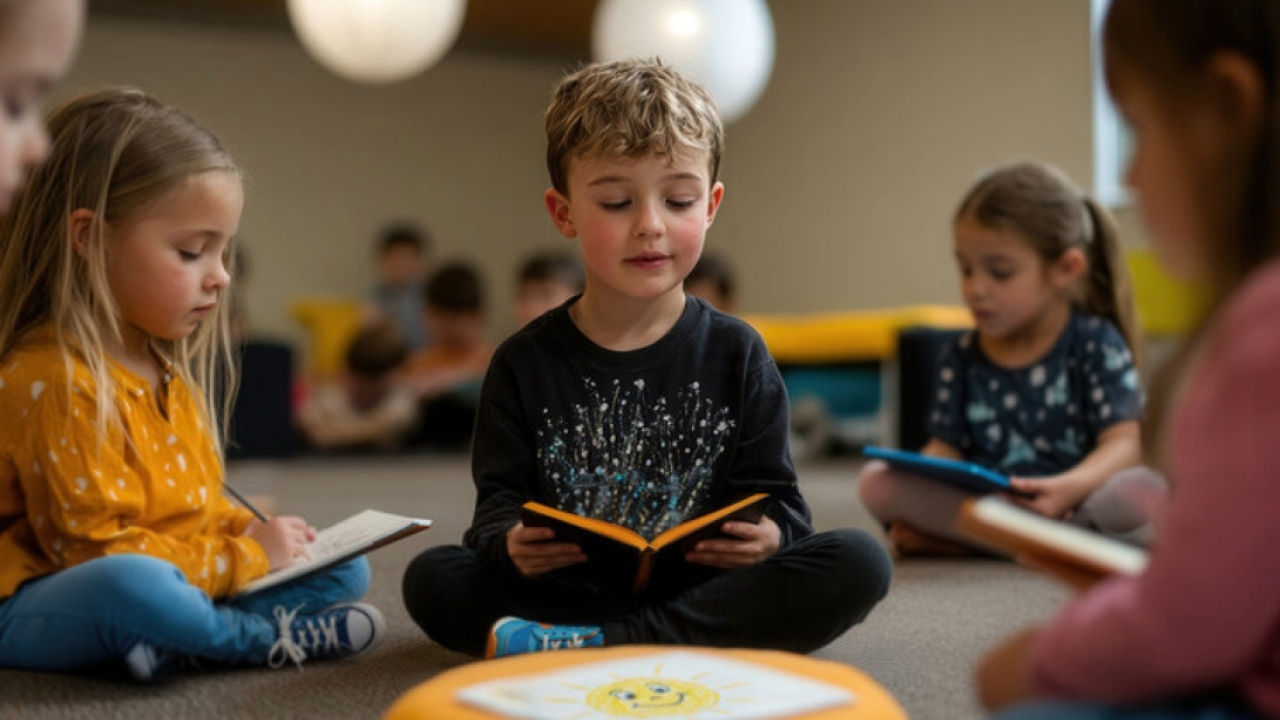
Every year in March, schools, families, and communities across the United Arab Emirates come together to celebrate UAE Reading Month, a nationwide initiative that promotes the culture of reading and lifelong learning. Established to encourage individuals of all ages to embrace reading as a daily habit, this initiative holds particular significance for young children in the early years of education.
Early childhood is widely recognised as one of the most important stages of human development. During these formative years, children’s brains develop rapidly, forming neural connections that support language acquisition, cognitive growth, emotional understanding, and social interaction. Reading during this stage is not merely an academic exercise; it is a powerful tool that shapes how children think, communicate, imagine, and understand the world around them. For educators and parents alike, fostering a love of reading in the early years is therefore not simply desirable—it is essential. By introducing children to stories, books, and rich language experiences from a young age, we lay the foundation for confident learners and curious thinkers.
Research consistently highlights the early years as a critical window for literacy development. Long before children begin to formally decode words, they develop what educators refer to as emergent literacy skills. These include listening, understanding stories, recognising patterns in language, and becoming familiar with books. Children who are regularly exposed to books begin to understand key concepts such as:
- how books work (turning pages from left to right)
- how stories have a beginning, middle, and end
- how pictures support meaning
- how language can describe feelings, actions, and ideas
In nursery and foundation stage classrooms, reading often begins through shared storytelling experiences. When teachers read aloud, children observe facial expressions, tone of voice, gestures, and rhythm. These cues help children understand meaning even before they are able to read independently. A simple picture book about animals, for instance, can spark lively interaction in the classroom. As a teacher reads about a roaring lion or a swinging monkey, children might imitate the sounds, act out movements, and repeat key vocabulary. Such experiences strengthen both language comprehension and engagement with storytelling.
One of the most powerful outcomes of early reading experiences is the expansion of children’s vocabulary. Storybooks introduce young learners to words that they may not encounter in everyday conversation. Consider the difference between spoken language and the descriptive language often found in children’s books. In daily life, a child might hear words like big, small, or happy. In contrast, a storybook might introduce richer vocabulary such as: gigantic. Sparkling, mysterious, cheerful, gloomy, enormous.
Repeated exposure to these words helps children develop a broader vocabulary and enhances their ability to communicate effectively. Teachers can further enrich vocabulary development through interactive reading strategies. For example, while reading a story about a storm, a teacher might pause and ask: “What do you think the word thunder means?” “How do you think the character feels when the sky becomes dark?” Such discussions encourage children to reflect on meaning, interpret context, and build language confidence.
Another important benefit of early reading experiences is the development of listening and concentration skills. In a world where children are often surrounded by fast-paced digital media, the ability to listen attentively to a story is an increasingly valuable skill. Storytime in the early years classroom provides opportunities for children to practise: sitting calmly and focusing on a narrative, following a sequence of events, remembering characters and plot details, responding thoughtfully to questions. Teachers often enhance engagement by asking predictive and reflective questions during storytelling: “What do you think will happen next?” “Why do you think the character made that choice?” “How would you solve the problem?”These interactions promote critical thinking and comprehension, essential skills for future academic success.
Books offer young children a gateway to worlds beyond their immediate surroundings. Through stories, children travel to distant lands, explore the depths of oceans, journey into space, and meet fascinating characters from different cultures and backgrounds. Such experiences play a vital role in nurturing imagination and creativity. For example, after listening to a story about pirates searching for treasure, children might: construct pirate ships using classroom blocks, draw treasure maps with hidden clues, engage in role-play as explorers searching for treasure. These creative activities allow children to extend the narrative beyond the book, deepening their understanding of the story while fostering imaginative thinking. Similarly, stories about forests, animals, or magical lands often inspire artistic expression through drawing, painting, or storytelling. In this way, reading becomes a springboard for creative exploration across multiple areas of learning.
Stories also provide children with valuable opportunities to explore emotions and relationships. Through characters and situations, children begin to understand feelings such as happiness, fear, disappointment, kindness, and empathy. For instance, a story about a child feeling nervous on their first day of school can help young learners recognise and express similar emotions in their own lives. Teachers can guide discussions by asking questions such as: “How do you think the character feels right now?” “What could a friend do to help them feel better?”These conversations encourage children to think about perspectives beyond their own, strengthening emotional awareness and social understanding.
In multicultural societies such as the United Arab Emirates, stories also serve as powerful tools for introducing children to diverse cultures, traditions, and experiences. Books can celebrate different languages, family structures, and traditions, helping children develop respect and appreciation for diversity.
Initiatives such as UAE Reading Month play a vital role in reinforcing the importance of literacy across the nation. Celebrated annually in March, the initiative encourages schools, universities, libraries, and families to organise activities that promote reading and intellectual curiosity. During this month, many schools introduce special programmes designed to inspire young readers. These may include: storytelling sessions led by teachers or guest storytellers, book fairs and library events, character dress-up days inspired by favourite stories, reading challenges that encourage daily reading habits and collaborative storytelling projects. For early years learners, the emphasis is not on competition or assessment but rather on creating joyful and meaningful reading experiences. A simple storytelling session, where children gather on a colourful carpet while a teacher brings a story to life through expressive narration, can leave a lasting impression. When children associate reading with warmth, excitement, and shared experiences, they begin to see books as companions rather than tasks.
Developing strong reading habits requires collaboration between schools and families. While teachers play a central role in introducing children to books, parents are equally important in reinforcing these habits at home.
Simple routines can make a significant difference: reading bedtime stories together, visiting libraries regularly, allowing children to choose their own books, discussing stories after reading. Schools often encourage family involvement through initiatives such as family reading challenges, where parents and children commit to reading together for a short period each day. When reading becomes a shared activity, children begin to associate books with comfort, bonding, and enjoyment.
Children who develop strong reading foundations during the early years often demonstrate significant advantages later in their educational journey. These include: improved academic performance, stronger communication skills, enhanced creativity and imagination, greater confidence in expressing ideas, improved problem-solving abilities. More importantly, children who grow up surrounded by books are more likely to develop lifelong reading habits. Such habits foster curiosity, independence, and a continuous desire to learn.
As UAE Reading Month reminds us each March, nurturing a culture of reading is a shared responsibility between educators, families, and communities. By creating engaging reading environments, encouraging storytelling, and celebrating books, we can inspire young learners to see reading as an adventure rather than an obligation. In the early years classroom, a simple story read aloud can spark laughter, curiosity, imagination, and meaningful conversation. These moments, though seemingly small, contribute to the development of confident readers and thoughtful individuals. When children are surrounded by stories, encouraged to explore books, and supported by enthusiastic adults, reading becomes more than a skill—it becomes a lifelong journey of discovery, imagination, and learning.
By Remediana Dias
Stay up to date
Subscribe to the free GESS Education newsletter and stay updated with the latest insights, trends, and event news every week. Your email address will remain confidential