The Playful Brain: Turning Leading Theories into 7 Everyday Practices for Young Children
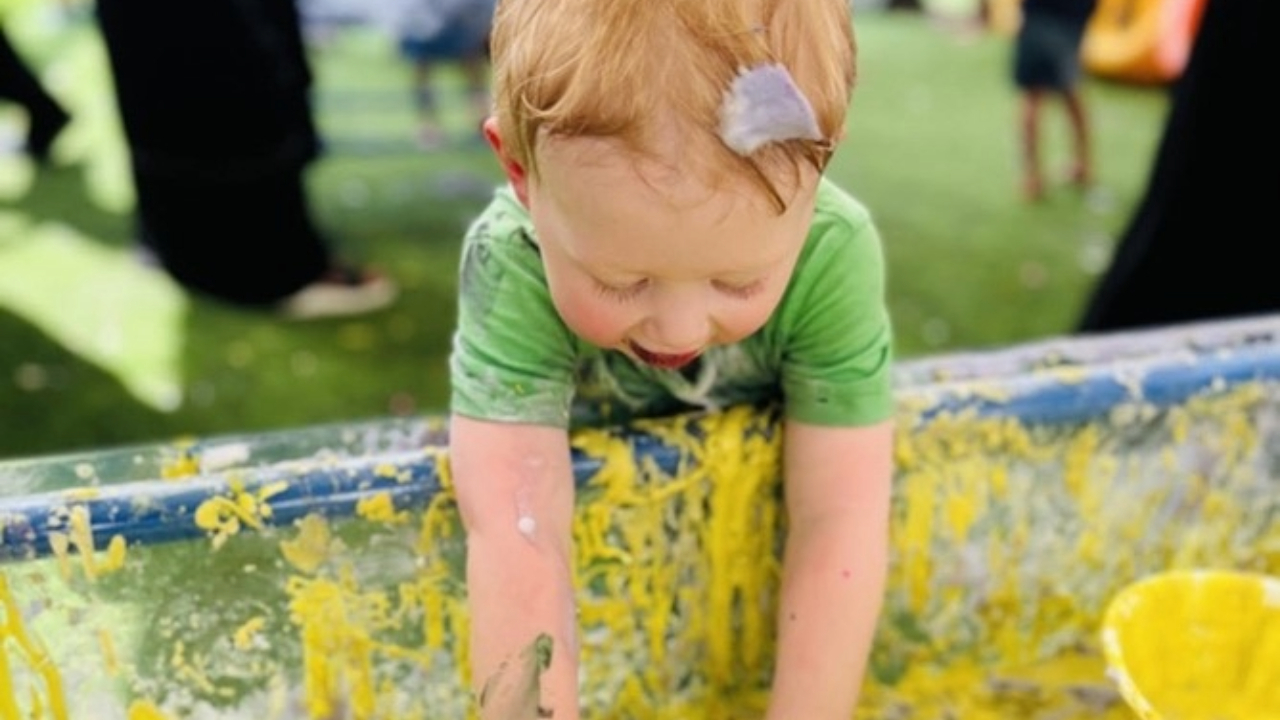
Have you ever watched a young child completely immersed in the art of making a Mess? Happy, playful, focused. That moment is not only adorable. It is a moment of neural wiring, identity building; as every playful encounter develops the young mind.
In an educational sphere where Artificial Intelligence has captured our attention, the significance of creating playful encounters has been overshaded. As a nursery vice principal; holistic development is key. Holistic development in the early years is not about preparing children for school; it is about preparing them for life. When we look beyond traditional academic readiness, we begin to see the child as a whole person. A thinking, feeling, moving, imagining young tot. Cognitive, emotional, social, and physical development do not develop separately. They expand like the roots of a tree: distinct, yet deeply intertwined.
Why Holistic Development Matters More Than Ever
Research from Skills Imperative 2035 (2022) was trying to foresee the most marketable skills with an everchanging workforce influenced by AI. What the data discovered was that some of the most valuable expertises in the future are: communication, creativity, collaboration. These soft skills can be harnessed though storytelling, role-playing and group art projects, long before the child even steps foot into formal education.
In a world shaped by AI, it is our human interpersonal skills which will set us apart. Nurseries have a canvas to cultivate them.
Theories That Influence Learning and Development
Dr Maria Montessori: Help Me Do It Myself
Montessori's philosophies promote self-directed learning (Montessori, 1965). When a toddler stubbornly response, ‘No, I will do it myself!’ he is beginning to show independence. Pouring their own juice, attempting to buckle up or putting on their own shoes, they are not only building fine motor skills but cultivating confidence and independence. This reflects Montessori’s slogan: “The hand is the instrument of the mind.” Every act of independence: ingredient scooped or plastic knife used, builds cognitive pathways.
Dr Caroline Leaf: Neuroplasticity
Under the age of five the brain is in a hyperplastic state. According to Leaf (2021) every interaction like a calm response or an act of upliftment, helps to wire neural pathways that develop resilience.
Loris Malaguzzi and Reggio Emilia: The 100 Languages of Children
Reggio Emilia validates the child’s expression. These gestures can be represented through drawing, dancing, storytelling, shadow play or clay modelling (Beach, 2025). The teacher is the co-researcher and a documentarian of wonder. Pedagogy is co-constructed, not merely delivered.
How These Ideas Come Alive in Real Classrooms
- Provide open ended materials, such as blocks, sensory trays, mud kitchens.
- Ask thought provoking questions. I wonder what would happen if we drop the spoon in the water. Will it sink or float? Why? …
- Give children an opportunity to discover before explaining.
- Create calm corners.
- Support physical development though outdoor play such as climbing monkey bars, running around playing Wolfie, Wolfie what’s the time.
- Strengthen fine motor skills through play dough, tongs, threading.
- Respect a child’s rhythm, some like to wiggle before they settle down.
A Story from the Classroom
Let me tell you a story about Yahia, a three-year-old boy, who arrived from Egypt. He spoke no English and clung on to his mother while observing from the side lines. During free play the teacher knelt down and said in English and Arabic,” Zayed is building a block tower, would you like to join?” Yahia, drifted closer, he touched a block, Zayed made room, Yahia smiled.
That moment illustrated Montesorri’s independence through doing. Reggio’s co-construction and Leaf’s neuroplasticity prompted the brain wiring towards belonging. Yahia wasn’t only building a block tower. He was building connection.
Because in every mess made and every tower built, we are not just educating children, we are growing great minds.
Reference List:
Montessori, M. (1965). The Montessori elementary material. Schocken Books.
Leaf, C. (2021). Cleaning up your mental mess: 5 simple, scientifically proven steps to reduce anxiety, stress, and toxic thinking. Baker Books.
Beach, P. (2025). Research on early literacy in Reggio and Montessori classrooms: A scoping review. Journal of Early Childhood Literacy, 25(3). https://doi.org/10.1177/14687984241234567
Taylor, A., Nelson, J., O’Donnell, S., Davies, E. and Hillary, J. (2022). The Skills Imperative 2035: what does the literature tell us about essential skills most needed for work? Slough: NFER.
By Samantha Smit, Vice Principal of Jack & Jill Nursery and PhD Candidate in Early Childhood Development
Stay up to date
Subscribe to the free GESS Education newsletter and stay updated with the latest insights, trends, and event news every week. Your email address will remain confidential