Where Neuroscience Shapes Learning Environments and Helps Children Thrive
Before a child opens a book, the space around them has already begun to frame their experience. There is light to adjust to, sound to navigate, a seat to choose and other people to connect with. Every school day unfolds through these encounters. Yet when we discuss improving education, how often does the physical environment receive the same attention as the curriculum or technology? At Kidzink, we believe it belongs in that conversation from the beginning. A learning environment should reflect how children experience the world, with opportunities to move, explore, concentrate and belong.
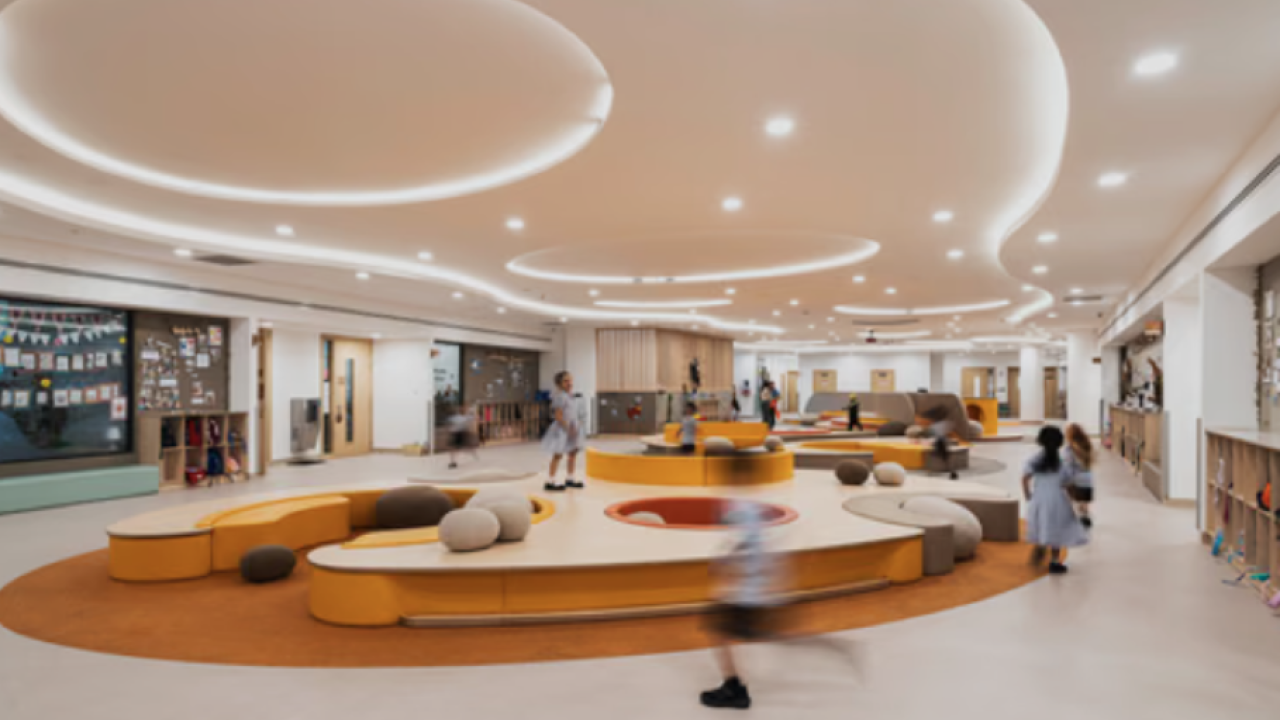
Understanding the relationship between space and learning
This is the thinking behind neuroarchitecture: exploring the relationship between the built environment and human cognition and experience. It brings questions about attention, memory and navigation into discussions about light, acoustics, materials and spatial arrangements.
Ana Mombiedro, Kidzink’s Head of Applied Research, invites educators and school leaders to consider a simple proposition: we shape spaces, and they shape us back.
For school leaders, that proposition offers a different starting point for design. Instead of beginning with a preferred appearance, begin with the experiences the school wants to make possible. How will a child explore independently? Where will collaboration happen? What choices will someone have when they need a quieter setting?
Four dimensions of an enriched learning environment
Kidzink’s Enriched Environment Model translates this approach into four dimensions that educators and designers can explore together.
Sensory cues: What does the environment ask children to process? Consider the sound of a busy classroom, changing daylight, the texture of materials and the amount of visual information on display. Different activities and learners may call for different sensory conditions.
Motor responses: How does the space invite movement? Furniture, accessible resources and clear routes can offer opportunities to change position, investigate and move between activities. Planning should account for different ages and abilities, alongside the practical needs of teaching.
Cognitive activity: What opportunities are there to question, experiment and concentrate? A learning environment can make room for building, problem-solving and returning to unfinished work. These activities deserve consideration when deciding how space is arranged and equipped.
Socioemotional interaction: Does everyone have a way to connect and belong? A welcoming entrance, places to gather and quieter spaces can offer different ways to participate. The design challenge is to accommodate those choices within a shared school community.
Turning research into everyday decisions
These ideas are explored in Beyond the Box™, Kidzink’s book on how neuroscience-based design can inform learning environments. Through Kidzink and Kōda, our architectural practice, we bring this thinking into conversations about architecture, interiors and furniture.
For educators, the first step can be observation. Walk through the school with pupils and teachers. Ask which spaces work well, where routines become difficult and what people would change. Use those insights to shape the brief, then revisit the space after changes to understand its performance.
A bigger budget alone cannot answer those questions. Clear educational intentions, informed design decisions and feedback from users give investment a purpose.
The question for your next project is therefore worth asking early: what should this space help children do, feel and discover?
Explore Beyond the Box™ and Kidzink’s approach at www.kidzink.com.
Stay up to date
Subscribe to the free GESS Education newsletter and stay updated with the latest insights, trends, and event news every week. Your email address will remain confidential