From AI Tools to Learning Systems: Lessons from a Real Classroom
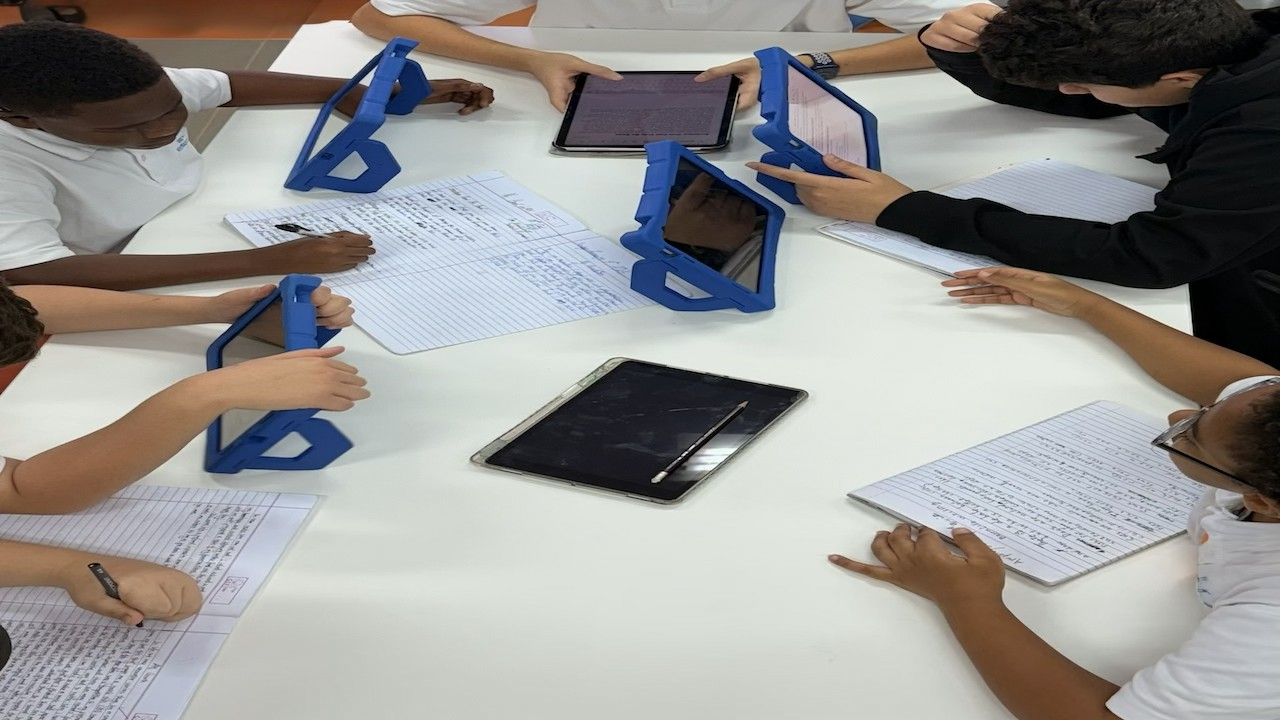
A 7th Grade student recently handed me a paragraph he'd written with AI assistance. It was fluent, well-structured, and entirely forgettable. When I asked him what he actually thought about the topic, he paused — and then spoke for two minutes with more nuance than anything on his page. That gap, between what AI produced and what he was capable of thinking, is where the real work of AI integration sits.
Artificial intelligence is no longer a future conversation in education — it is already in our classrooms. Yet while many schools have adopted AI tools, far fewer have moved toward meaningful, system-level implementation. The question is no longer Should we use AI? It is Are we using it in a way that actually improves learning?
Too often, AI is used in isolated ways — summarising content, generating answers, speeding up tasks. Useful, yes. But this approach risks reducing thinking rather than enhancing it. To unlock its true potential, we need to move beyond tools and start designing learning systems.
From Access to Intentional Design
In a middle school classroom, AI integration often begins with curiosity. Students explore, test, and experiment. But without structure, this quickly becomes surface-level use.
The shift happens when AI is no longer positioned as the “answer machine,” but as a thinking partner.
Instead of asking:
What is the answer?
We begin designing for:
How can AI deepen thinking, challenge ideas, and extend learning?
This shift transforms AI from a shortcut into a scaffold—one that supports, rather than replaces, cognitive effort.
What This Looks Like in Practice
When AI is embedded intentionally, it becomes part of the learning process itself rather than a shortcut around it.
In one 7th Grade writing unit, I asked students to generate three AI responses to the same prompt — each from a different perspective — before drafting their own piece. The task wasn't to use the AI output. It was to interrogate it. Students annotated what each version got right, where it flattened complexity, and which assumptions it carried. By the time they began their own drafts, they were no longer writing against a blank page; they were writing against three flawed starting points they'd already outgrown. The quality of their thinking, visible in their reflections, was noticeably sharper than in units where AI wasn't used at all.
This kind of integration shows up across the week in small, deliberate ways. Students generate multiple perspectives before writing tasks, then critique those AI responses for bias, accuracy, and depth. They use AI for iterative feedback and refinement, and compare human and AI thinking to build metacognition. Grounded in frameworks such as Universal Design for Learning and Cognitive Load Theory, AI acts as a dynamic scaffold — supporting access while maintaining challenge.
Here, AI is not an add-on. It is woven into how students think, question, and create.
Teacher Readiness: The Make-or-Break Factor
Successful AI integration is not driven by tools — it is driven by teachers. A common misconception is that teachers must first "master" AI before they can use it well. In reality, what matters more is knowing when and why to use AI, designing tasks that maintain cognitive demand, and facilitating meaningful reflection on what AI produces.
This requires a shift from tool training to pedagogical training. Teachers need practical frameworks, real classroom examples, and the space to experiment and reflect — not another webinar on prompt engineering. Without this, AI becomes either underused or over-relied on, and neither outcome serves students.
From Passive Use to Student Agency
Another critical shift is moving students from passive users to active decision-makers.
In many classrooms, students input prompts and accept outputs without question. However, meaningful learning happens when students engage critically.
This looks like:
- Evaluating AI responses for bias and reliability
- Reflecting on how AI impacts their thinking
- Tracking their own usage habits
- Choosing when not to use AI
When students develop this awareness, they begin to use AI with intention—not dependence.
Governance: Creating Clarity, Not Control
As AI becomes more embedded in daily learning, governance becomes essential — not as restriction, but as clarity. Effective school-wide approaches share a few features in common: clear expectations around when and how AI can be used, transparent communication with students about those expectations, consistent responses when AI is misused, and alignment across teams so that a student doesn't receive contradictory messages from their English and Science teachers.
Ethical use must also be explicitly taught. Students need guidance on academic integrity, responsible use of AI-generated content, and the data and privacy implications of the tools they're using. Without this scaffolding, schools risk creating confusion, mistrust, or quiet over-reliance — none of which surface until they're already entrenched.
Measuring What Matters
One of the biggest misconceptions is that measuring AI impact must be complex.
In reality, meaningful insights can come from simple, intentional practices:
- Student reflections
- Teacher observations
- Comparing work with and without AI
- Monitoring engagement and participation
The goal is not to overcomplicate—but to stay focused on what matters.
Impact should be visible in:
- Deeper thinking
- Greater independence
- Higher quality work
- Increased engagement
The Shift Schools Need to Make
The future of AI in education will not be defined by the number of tools a school adopts, but by how intentionally those tools are embedded into learning. Schools that lead in this space will align AI with curriculum goals, invest in teacher readiness, build student agency, and establish clear governance. Everything else is decoration.
I think often about that 7th Grade student — the one whose spoken thinking outpaced his AI-assisted paragraph. Our job isn't to choose between his voice and the tool. It's to design classrooms where the tool makes his voice louder, sharper, and more his own. That is the shift. And it is the one worth making.
By Aarifa Gora
Stay up to date
Subscribe to the free GESS Education newsletter and stay updated with the latest insights, trends, and event news every week. Your email address will remain confidential