Bridging the Divide: Why Higher Education Must Embrace Integrated STEAM in the Age of AI
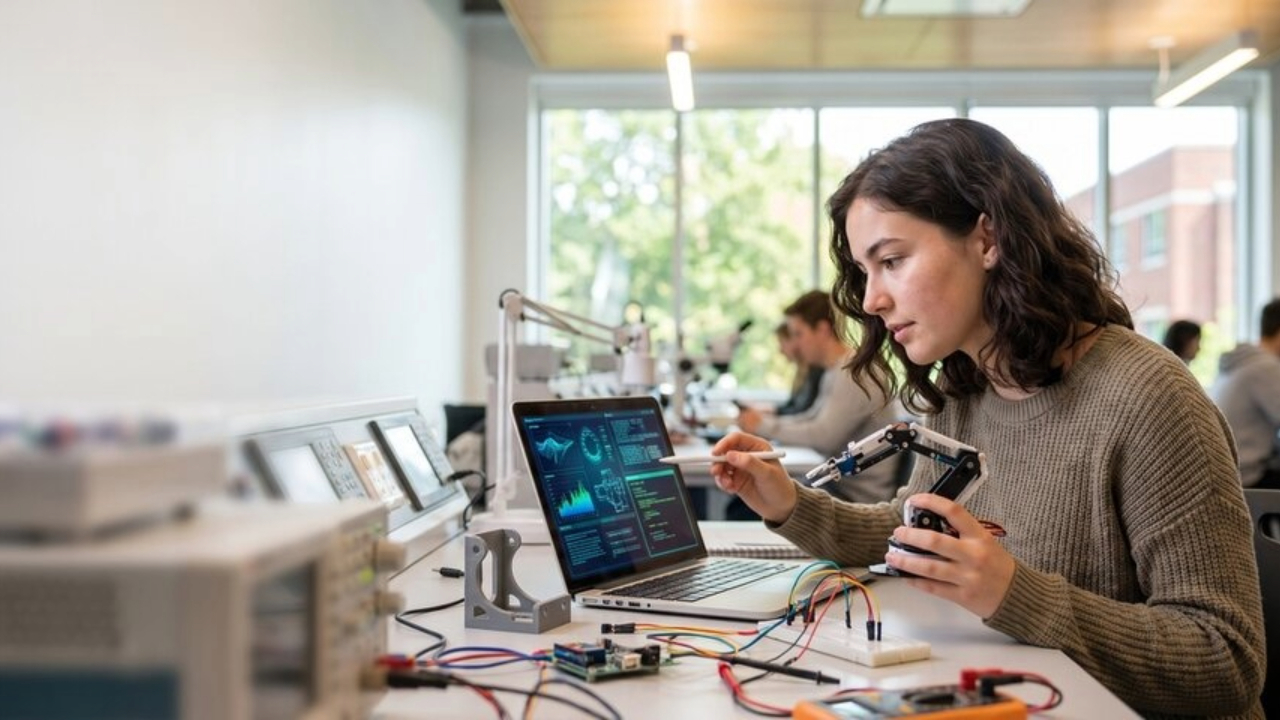
Across the globe, schools are rapidly transforming their curricula to reflect the demands of a technology-driven, innovation-led economy. In international K–12 education especially, STEAM—Science, Technology, Engineering, Arts, and Mathematics—has become a core pedagogical framework. Yet in higher education, integration remains the exception rather than the norm. Universities continue to operate largely within traditional silos: STEM disciplines on one side, liberal arts and creative fields on the other.
This structural divide presents one of the most urgent strategic challenges facing higher education today.
As artificial intelligence, robotics, immersive technologies, and advanced manufacturing reshape industries at unprecedented speed, employers are no longer seeking graduates who are solely technically proficient or purely creative. They need hybrid professionals—engineers who understand user experience, designers who can code, data scientists who think ethically and creatively, and entrepreneurs who can translate complex technologies into meaningful human solutions.
The global demand for STEAM competencies is clear. The World Economic Forum consistently highlights analytical thinking, creativity, technological literacy, and complex problem-solving among the most critical skills for the future workforce. Yet despite this demand, higher education provision remains fragmented. Students who have experienced integrated STEAM approaches throughout their K–12 education often encounter rigid degree structures at university level, forcing them to choose between technical depth and creative exploration.
This gap is not merely curricular—it is structural, cultural, and institutional.
International schools around the world have widely adopted STEAM as a core philosophy because they recognise that innovation emerges at the intersection of disciplines. Project-based learning, design thinking, robotics labs, digital fabrication spaces, and interdisciplinary collaboration are increasingly standard features of forward-thinking K–12 environments. Students graduate from these systems accustomed to solving real-world problems through integrated approaches.
Yet when they transition to university, many find themselves navigating faculty boundaries, accreditation constraints, and departmental silos that discourage precisely the type of interdisciplinary collaboration they have been trained to value.
Why has higher education lagged behind?
Part of the answer lies in historical legacy. Universities were structured around disciplinary expertise at a time when knowledge production required deep specialisation within narrower fields. Accreditation frameworks, faculty career pathways, and funding models reinforced these divisions. While this structure ensured academic rigour, it also created barriers to integration.
However, the era of AI, robotics, and exponential technologies demands a new model.
Artificial intelligence does not operate solely as a technical tool—it shapes culture, ethics, design, communication, and human behaviour. Robotics is not simply mechanical engineering—it intersects with psychology, interface design, storytelling, and societal impact. The most transformative innovations of the past decade—from smartphones to immersive gaming platforms—have emerged from the seamless fusion of engineering precision and creative imagination.
This is precisely where integrated STEAM higher education becomes essential.
In Europe, one institution has taken a pioneering step in this direction: UDIT – University of Design, Innovation and Technology. As one of the first and only specialised STEAM-focused higher education institutions in Europe, UDIT represents a strategic rethinking of how universities can be structured to meet 21st-century skills.
Rather than treating design, technology, and innovation as separate domains, UDIT positions them as inherently interconnected. Its academic model recognises that design is not merely aesthetic, technology is not merely functional, and innovation is not accidental—it is the product of structured interdisciplinary collaboration. By embedding creative methodologies alongside technical mastery, institutions like UDIT aim to produce graduates capable of leading in emerging fields where boundaries no longer apply.
The strategic opportunity for universities lies in developing comprehensive STEAM curricula that move beyond token interdisciplinary modules and instead integrate disciplines at a structural level.
Several frameworks can support this transformation:
1. Curriculum Integration Through Design Thinking
Design thinking provides a practical methodology for bridging technical and creative domains. By embedding user-centred research, prototyping, iterative testing, and systems thinking into engineering and science programmes, universities can cultivate graduates who build solutions that are not only functional but meaningful.
2. Institutional Models that Break Silos
True STEAM integration requires more than collaborative projects—it demands organisational redesign. Cross-faculty governance structures, shared innovation labs, co-taught modules, and interdisciplinary research clusters can foster sustained collaboration. Faculty recruitment strategies should value hybrid expertise and industry engagement.
3. Industry and Ecosystem Partnerships
The complexity of AI and robotics ecosystems requires collaboration beyond campus walls. Partnerships with technology companies, creative studios, startups, and public sector institutions can ensure that curricula remain aligned with workforce needs while maintaining academic rigour. Co-developed programmes and applied research projects enable students to engage with real-world challenges.
4. Accreditation and Academic Rigour
A common concern is that integration may dilute disciplinary depth. On the contrary, a well-designed STEAM model strengthens rigour by situating expertise within applied contexts. Accreditation frameworks must evolve to recognise interdisciplinary competencies while preserving standards of excellence.
The case for specialised STEAM higher education is not simply about innovation—it is about addressing structural skills shortages. Many economies face gaps in roles that require both technical proficiency and creative adaptability: user experience engineers, immersive media developers, robotics designers, sustainable systems architects, AI ethicists, and digital product strategists. These are not niche positions; they represent the future of competitive industries.
Higher education institutions that fail to respond risk producing graduates misaligned with labour market realities.
At the same time, universities must guard against reducing education to workforce training alone. The integration of arts within STEM is not merely instrumental—it ensures that technological development remains human-centred, ethical, and socially responsible. In an age of generative AI and autonomous systems, the capacity to question, contextualise, and creatively interpret technology becomes as critical as the ability to engineer it.
The transformation toward integrated STEAM higher education will not occur overnight. It requires visionary leadership, institutional courage, and policy support. Yet the opportunity is significant. Universities that embrace this shift can position themselves at the forefront of educational innovation, attract globally mobile students accustomed to interdisciplinary K–12 models, and contribute meaningfully to national innovation strategies.
As we look toward 2026 and beyond, the question is no longer whether STEAM matters. K–12 education has already answered that. The pressing question is whether higher education is ready to follow.
The future economy will not be divided into STEM and liberal arts. It will belong to those who can integrate them. Institutions that recognise this reality—and act decisively—will define the next era of higher education.
By Damian Fernandez Gregorio
Stay up to date
Subscribe to the free GESS Education newsletter and stay updated with the latest insights, trends, and event news every week. Your email address will remain confidential