From Data to Design: How Students Are Building Carbon-Neutral and Sustainable Cities Using AI & STEM
Building the Cities of the Future
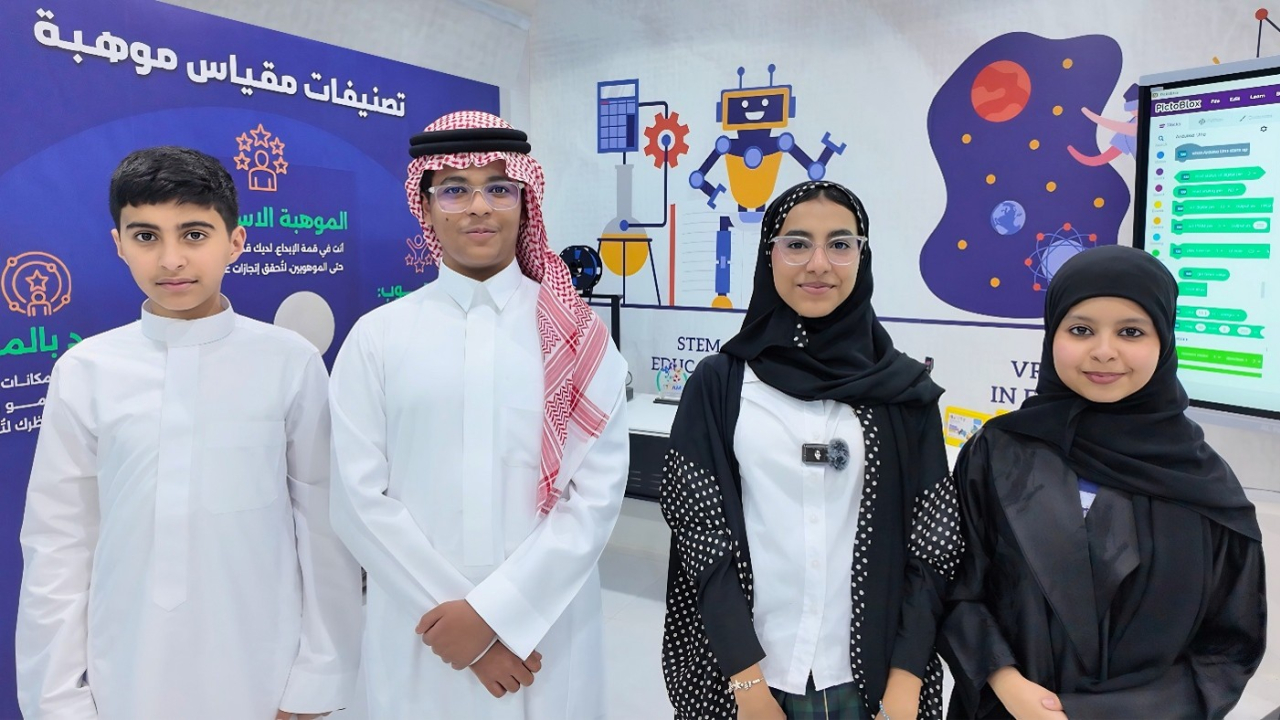
As part of our participation in GESS Education Saudi Arabia, our students from Alfaisaliyah Private Schools Company – Jeddah will be presenting a project titled “Carbon-Neutral and Sustainable City”—a student-built model developed within a STEM learning framework to demonstrate how future cities can reduce carbon emissions through intelligent, data-driven systems.
Aligned with Saudi Vision 2030 and the United Nations Sustainable Development Goals (SDGs), this project integrates science, technology, engineering, Arts and mathematics to address real-world sustainability challenges such as food waste, water mismanagement, and sustainable resource management.
However, what makes this project truly impactful is that it did not begin with building a model—it began with investigating real problems in real environments.
From Awareness to Deep Investigation
Rather than jumping directly into solutions, students followed a structured STEM methodology focused on observation, stakeholder interviews, pattern recognition, and root cause analysis using the “5 Whys” approach.
This process helped them move beyond surface-level problems like “food waste” or “water overuse” and uncover deeper systemic issues. Students discovered that many environmental challenges are not caused by a lack of awareness—but by a lack of data, lack of adaptive systems, and reliance on manual decision-making.
|
|
|
|
|
|


Field Investigation 1: Food Waste and Its Carbon Impact

Students conducted their first scientific investigation at Alriwaq Alomawi Restaurant, where they studied food waste in a real operational setting.
Globally, nearly one-third of all food produced is lost or wasted, contributing significantly to greenhouse gas emissions. In Saudi Arabia alone, food waste exceeds 40 billion SAR annually, with an average of over 250 kg of food wasted per person each year—more than double the global average.
Through direct observation and interviews with restaurant staff, including Mr. Yassin, students identified key patterns:
- Overproduction of meals
- Customer over-ordering
- Inefficient inventory management
By applying the 5 Whys method, they uncovered the root cause:
👉 Lack of data-driven demand prediction systems
This insight shifted their perspective—from seeing waste as a behavior problem to understanding it as a system design problem.
Field Investigation 2: Water Efficiency in Public Spaces
|
|
|
|
|
|


The second investigation focused on water usage in public parks—an especially critical issue in a country facing water scarcity.
Saudi Arabia is one of the most water-stressed countries in the world, and inefficient irrigation systems contribute to significant resource loss. Studies show that traditional irrigation in public landscapes can waste thousands of cubic meters of water annually due to fixed schedules and lack of environmental feedback.

Forecasting Water Consumption for Sustainable Development in Saudi Arabia
During their field visits, students observed:
- Overwatering in some areas and Dry zones in others.
- Irrigation systems operating regardless of temperature or soil conditions.
Through analysis, they identified the root cause:
👉 Absence of smart, sensor-based irrigation systems
Efficiency is not about using less—it is about using resources intelligently.
Designing a Carbon-Neutral Smart City Model
|
|
|


Based on their findings, students designed and built a Carbon-Neutral Smart City Model that integrates renewable energy, AI, and IoT technologies.
🌞 Renewable Energy Systems
The model incorporates solar panels and wind turbines to simulate clean energy generation, reducing reliance on fossil fuels.
🏠 Smart Homes and Smart Grid
Students designed systems to monitor and optimize energy consumption, demonstrating how electricity can be efficiently distributed using smart grids.
🌱 Climate-Smart Agriculture
Greenhouses in the model use controlled environments and optimized resource usage to reflect sustainable food production.
🌐 AI + IoT Integration
Using microcontrollers, sensors, and PictoBlox AI tools, students developed systems that:
- Predict food demand and Classify food freshness
- Monitor environmental conditions
- Optimize water usage through smart irrigation
Real-time dashboards display data, allowing users to make informed decisions—transforming static environments into adaptive systems.
From Static Systems to Intelligent Cities
|
|
|


A key learning outcome from this project is the distinction between traditional and smart systems.
In smart systems:
- AI predicts demand
- Sensors provide real-time data
- Systems adapt automatically
This shift from reactive to predictive systems is essential for achieving carbon neutrality and sustainable urban development.
Impact: Beyond Technology
|
|
|
|
|
|


The impact of this project extends far beyond the model itself.
Students developed:
- Engineering design and prototyping skills
- Critical and systems thinking
- Data analysis and AI literacy
- Environmental awareness and responsibility
More importantly, they experienced how technology can be used not just to solve problems—but to prevent them before they happen.
Conclusion: From Classroom Innovation to Real-World Impact
The “Carbon-Neutral and Sustainable City” project demonstrates how STEM education can bridge the gap between classroom learning and global challenges.
By combining field investigation, artificial intelligence, and engineering design, students transformed real-world problems into scalable, intelligent solutions.
In presenting this work at GESS Education Saudi Arabia, we aim to emphasize a powerful message:
The future of sustainable cities will not be built by technology alone—
it will be built by young innovators who understand problems deeply and design solutions with purpose.
To fully experience the students’ innovation, please click the YouTube link below to watch their presentation and explanation:
https://youtu.be/IqJNWIDU6HM?si=Jajpy_gg8gfLxhGj
Director
Mr. AIMAN ABDULRAHEEM ALHARBY
Author
Eng. Abdelmoneim Mohammed Ahmed Ali
With students from Alfaisaliyah Private Schools Company - Jeddah:
Saud Hisham Ahmed Ghubar (Grade 10)
Rose Mohamad Abduljalil Alsalahy (Grade 9)
Reema Salem Ali Alzahrani (Grade 7)
Mohammed Musfir Mohammed Al-Qahtani (Grade 6)
Stay up to date
Subscribe to the free GESS Education newsletter and stay updated with the latest insights, trends, and event news every week. Your email address will remain confidential