Inclusion as a Living Practice: A Personal Reflection as an Architect of Inclusive Culture
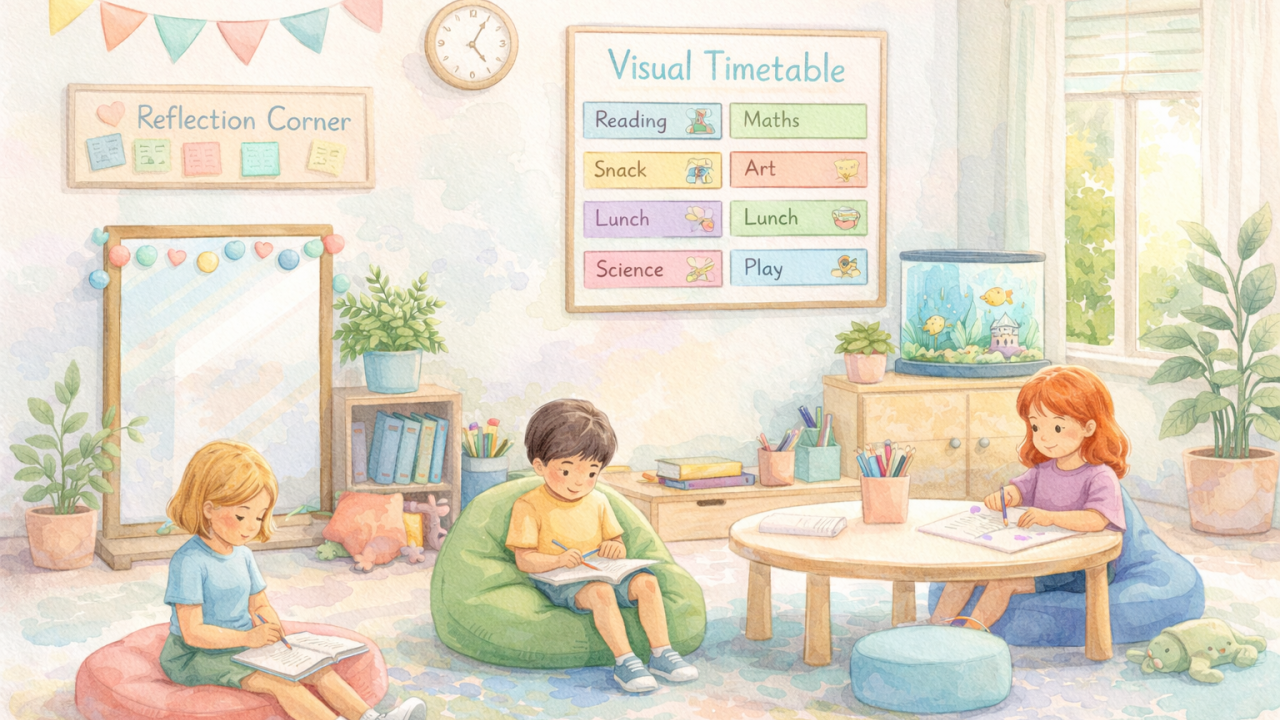
There is a moment in every school day that defines what we truly stand for. It is not written in policy documents or displayed on walls. It is seen in the quiet interactions. A teacher pausing to adjust a lesson so every child can access it. A student waiting patiently for a peer to express themselves. A leader choosing long-term belonging over short-term convenience.
For me, inclusion has never been a concept. It has always been a lived experience.
As Director of Inclusion, I have come to understand that inclusion is not built solely by statements. It is built when vision, mission, and policy move beyond intention and become everyday practice. When these elements align, they do not sit separately. They work together to set the tone of a school. Vision gives direction. Mission gives purpose. Policy gives structure. Practice gives it life. That’s the whole blueprint an architect envisions.
But the real test lies in what I call practical inclusion.
Practical inclusion is balanced. It is thoughtful. It is fair. It is not at the expense of any child. Not the neurodivergent child and not the neurotypical child. It is about designing systems where both thrive together. Where support does not isolate, and challenge does not overwhelm.
In my experience, students with higher equity needs require something deeper than access. They require safety. Not just physical safety, but emotional and cognitive safety. This is where intentional spaces become essential. Emotional literacy rooms, social literacy spaces, and mindful areas are not exclusions from learning. They are extensions of it. These are spaces where a child can regulate, reflect, and return stronger. Where they are neither overwhelmed by stimulation nor underwhelmed by disengagement.
The goal is always to return. Return to learning. Return to connection. Return to self.
Behavior, in this journey, is communication. I have learned that behavior management is not about control. It is about understanding. It is about asking what the behavior is telling us rather than reacting to what it looks like. Restorative practice has been one of the most powerful tools in shaping this understanding. When we approach behavior through restoration rather than punishment, we respect the dignity of the child. We teach accountability without removing belonging.
Respect is not a reward in inclusive spaces. It is the foundation.
Yet, none of this is sustainable without teachers and support teachers. Teachers and Learning Support aides are at the heart of inclusion. They carry its daily responsibility. And they need reinforcement, not just instruction. They need clarity, collaboration, and continuous support. Inclusion cannot be an added expectation. It must be embedded in how teaching and learning are designed.
This is why culture matters deeply.
Culture is not built once. It must be revisited, reinforced, and rearticulated every term. The tone of inclusion must be set again and again. Through conversations, through modelling, through decisions. Leadership and governance play a critical role here. When leadership is aligned in vision and consistent in action, inclusion becomes a shared responsibility rather than a departmental function.
It does not matter how many students require additional support. What matters is whether the system can sustain their needs alongside the needs of every other child. Inclusion is not about numbers. It is about readiness, responsiveness, and respect.
And inclusion, importantly, is not limited to students with diagnosed needs.
Some of the most powerful moments of inclusion I have witnessed have nothing to do with labels. They are moments of language, identity, and belonging. A non-native Arabic speaking student standing confidently on stage, reciting with fluency and pride. A student who once struggled with English delivering poetry with clarity and expression. These are not just academic achievements. These are moments of inclusion.
They tell us that a child feels seen. Feels capable. Feels that they belong.
n diverse school environments, where students come from across the world, inclusion takes on an even deeper meaning. It is not enough for students to sit in the same classroom. They must feel that they resonate with the people around them. That their culture, their voice, their identity are acknowledged and valued.
Inclusion lives in these connections.
It is also not confined to classrooms. It extends into corridors, stages, playgrounds, and community spaces. It is reflected in how departments collaborate. When academic teams, performing arts, national identity programs, and inclusion teams work together with shared intent, the student experience becomes seamless.
In many ways, the inclusion team becomes the pivot. Not as a separate entity, but as a connecting force. Holding the system together. Ensuring that every decision, every interaction, and every experience aligns with the belief that every child matters.
Because ultimately, inclusion is not a program.
It is a way of being. It begins in the early years, where intervention is timely and compassionate. It continues through primary years, where foundations are strengthened. It evolves in secondary years, where identity and independence grow. And it carries through to graduation, where each student leaves not just with knowledge, but with a sense of belonging and self-worth.
When inclusion is done well, it is not visible as an initiative. It is felt as a culture.
A culture where every child, regardless of ability, language, or background, knows this: There is a place for me here.
By Faiza M.
Stay up to date
Subscribe to the free GESS Education newsletter and stay updated with the latest insights, trends, and event news every week. Your email address will remain confidential