From Knowledge to Application: A Practical STEM Model for Real Learning in Schools
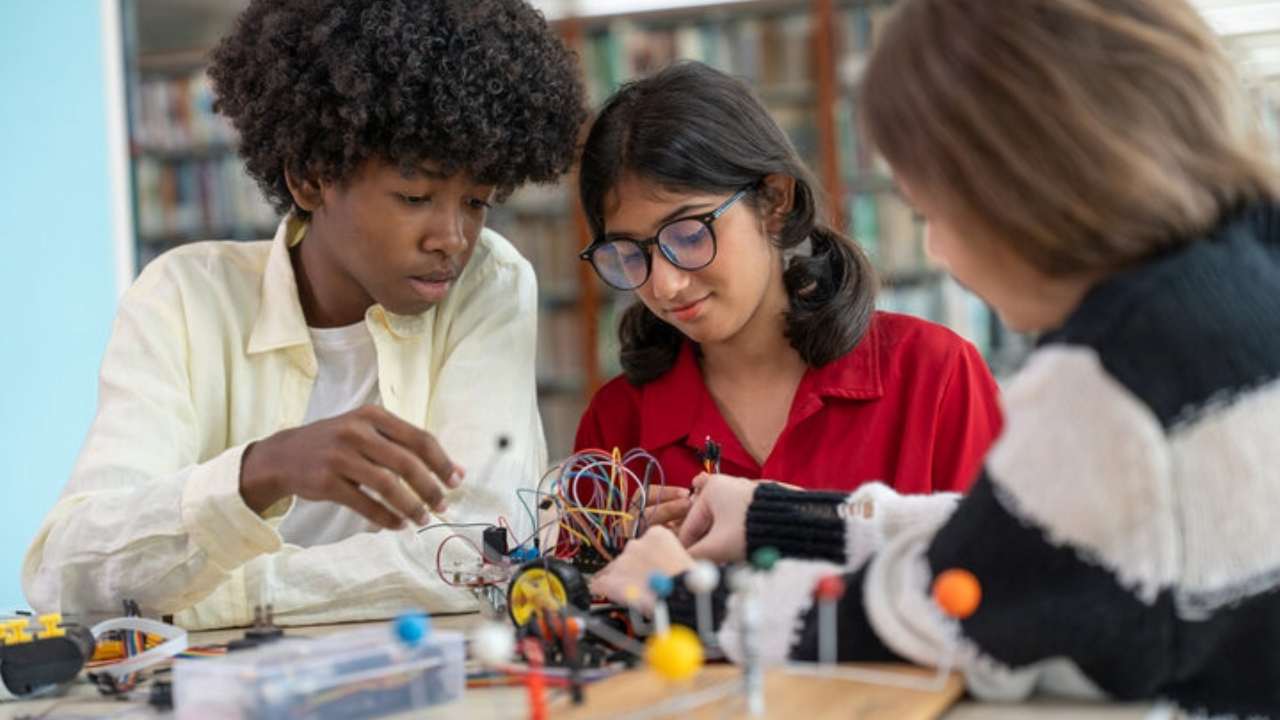
STEM is often misunderstood in modern education. Walk into many schools and you will find robotics kits, collaborative activities, and classrooms full of movement and discussion. On the surface, everything appears innovative and engaging. However, when students are asked to explain what they are doing, why they are doing it, or how it connects to real-life situations, many struggle to respond with depth or clarity.
The problem is not effort. The problem is design.
STEM is not simply about adding projects or technology into classrooms. It is about transforming the way students think, question, analyze, and apply knowledge. Without this transformation, STEM becomes a collection of activities rather than a meaningful learning approach.
The Gap Between Knowledge and Application
Many classrooms still operate within a traditional structure where knowledge is delivered by the teacher, received by students, and assessed through memorization and recall. This model may produce students who achieve high grades in examinations, but it often fails to prepare them for unfamiliar situations that require reasoning and problem solving.
This gap becomes visible when students can solve mathematical equations but cannot apply them in real-life contexts, or when they memorize scientific concepts without understanding how these concepts explain the world around them. Students may know information, but they often struggle to use it effectively.
This is where STEM becomes essential. Its purpose is not only to teach content, but to help students transfer learning into action.
STEM as a Framework for Thinking
STEM should not be viewed as a separate subject or an isolated initiative. It is a framework for learning that integrates science, technology, engineering, and mathematics in a purposeful and connected way.
Science develops understanding. Technology provides tools for exploration and innovation. Engineering encourages design and problem solving. Mathematics builds logical reasoning and precision.
However, simply combining these areas does not automatically create meaningful learning. The effectiveness of STEM depends on how learning experiences are designed and sequenced. Strong STEM learning moves students gradually from curiosity to investigation, then from understanding to application.
A Practical Model for STEM Learning
Successful STEM lessons often begin with a real and relatable problem. Instead of starting with direct instruction, students are first presented with a question that creates curiosity and encourages exploration. For example, students may investigate why certain building materials keep homes cooler in hot climates or how communities can reduce water waste.
This initial challenge gives students a reason to learn. It shifts learning from passive reception to active inquiry.
Students then move into guided exploration. They observe, test, discuss, and gather information. During this stage, the teacher does not immediately provide answers. Instead, the teacher guides thinking through strategic questioning and discussion. This process develops curiosity, independence, and analytical thinking.
Once students have explored the problem, formal concepts are introduced. At this stage, scientific principles, mathematical relationships, and design concepts become more meaningful because students already understand the context in which they are being used. Learning becomes connected rather than abstract.
Students are then asked to apply their learning through design and problem solving. They create solutions, test ideas, identify weaknesses, and improve their work. This stage is critical because it transforms understanding into practical skill. Students learn that failure is not an endpoint but part of the learning process.
Reflection follows application. Students evaluate what worked, what failed, and what they would change in future attempts. This reflection strengthens reasoning, communication, and self-awareness.
Why Structure Matters
One of the biggest mistakes in STEM implementation is focusing on activity rather than structure. In some classrooms, projects become entertaining experiences with limited academic depth. Students remain busy, but learning outcomes are unclear.
A structured STEM approach ensures that activities are connected to clear learning goals and measurable outcomes. It balances creativity with academic rigor. Students do not simply participate in tasks. They engage in purposeful thinking.
This structure also allows teachers to maintain curriculum coverage while developing essential skills such as collaboration, critical thinking, communication, and problem solving.
The Changing Role of the Teacher
Effective STEM learning requires a shift in the teacher’s role. The teacher is no longer the sole source of information but becomes a facilitator of learning experiences.
This change can be challenging. Teachers must learn to ask deeper questions, allow students time to think, and support learning without immediately providing solutions. Productive struggle becomes part of the classroom experience.
At first, this approach may feel uncomfortable for both teachers and students. Active classrooms are often noisier and less predictable than traditional classrooms. However, when learning is well structured, this activity leads to stronger engagement and deeper understanding.
Challenges in Implementation
Despite its benefits, implementing STEM effectively comes with challenges. One common concern is time pressure. Teachers often worry that inquiry-based learning will prevent them from completing the syllabus. However, STEM should not be treated as an additional subject. It should be integrated into existing lessons and curriculum objectives.
Assessment is another challenge. If schools continue to rely mainly on examinations that measure memorization, teachers will naturally prioritize recall-based teaching. For STEM to succeed, assessment methods must also evolve to include application, reasoning, and open-ended problem solving.
Training and professional development are equally important. Teachers need support, practical models, and opportunities to experiment with new approaches in order to build confidence in STEM instruction.
Moving Forward
Effective STEM implementation does not require expensive resources or large-scale transformation overnight. It begins with small and intentional changes. One lesson can start with a real-world problem. One classroom discussion can prioritize thinking over memorization. One teacher can begin creating opportunities for exploration and application.
Over time, these small shifts create meaningful change.
The future of education depends not only on what students know, but on what they are able to do with that knowledge. STEM provides a pathway toward this goal by moving learning beyond memorization and into purposeful application.
That is where real learning begins.
By Sara Abdelmonien
Stay up to date
Subscribe to the free GESS Education newsletter and stay updated with the latest insights, trends, and event news every week. Your email address will remain confidential