From Play to Purpose: What Do Strong Foundations Really Look Like in Saudi Early Childhood Education?
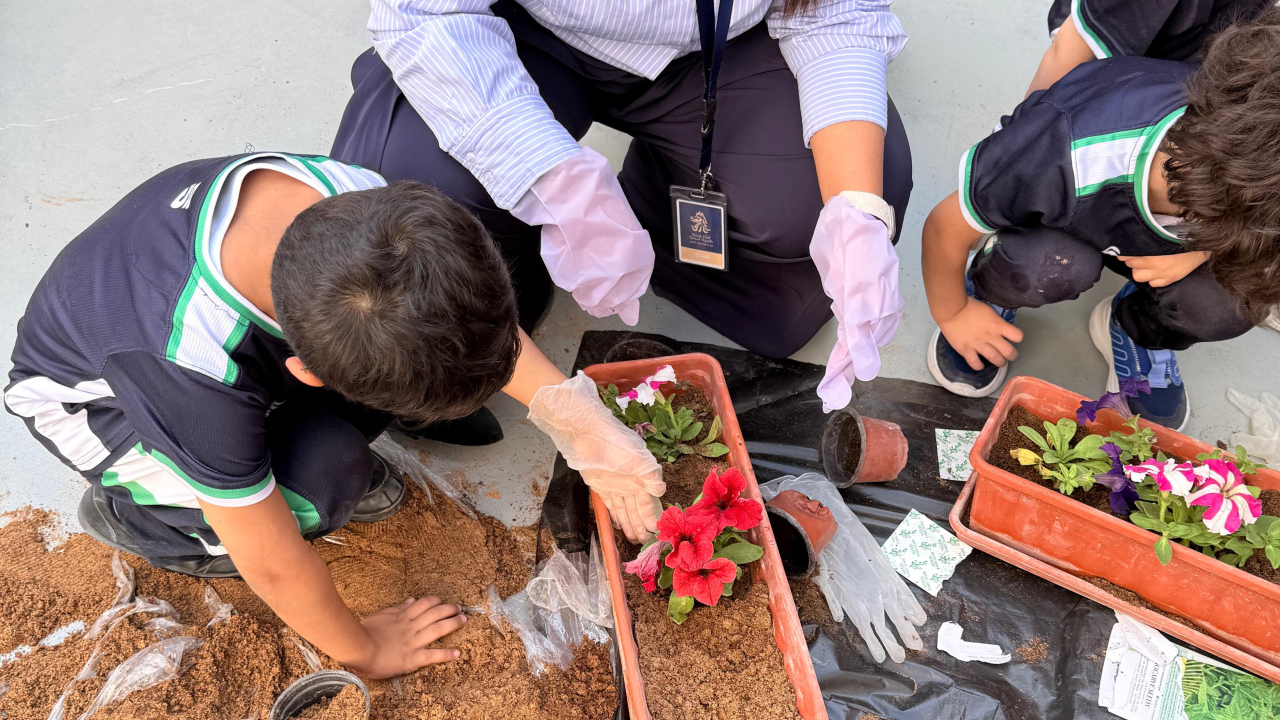
In the early years, learning often begins with play but the outcomes are far from simple. What may look like unstructured exploration is, in reality, the starting point of a child’s lifelong learning journey. Moving from play to purpose requires intentional, well-designed experiences that support development in meaningful ways. As Kellmer Pringle stated, “That early childhood experiences have great potency is quite beyond doubt: so is the fact that the consequences are long lasting and may be difficult to alter.” (Kellmer Pringle, 1975 as cited in Reily, 1983 p. 6). This raises an important question: what do strong foundations truly look like in early childhood education, particularly within the rapidly evolving context of Saudi Arabia?
Education in the early years is not simply preparation for school; it is preparation for life. During this critical stage, children develop the cognitive, social, emotional, and physical skills that underpin future learning. High-quality early childhood education focuses on the whole child, ensuring that learning is engaging, developmentally appropriate, and rooted in meaningful experiences.
As part of Saudi Arabia’s Vision’s 2030 early childhood education is undergoing a significant transformation which has placed strong emphasis on expanding access to early years provision, improving quality, and aligning educational practices with global standards. This shift reflects a growing recognition that investment in early learning is essential for building a future-ready generation equipped with the skills needed in a rapidly changing world.
A key component of this transformation is the increasing adoption of play-based and inquiry-driven approaches. While play is sometimes misunderstood as informal or lacking structure, it is, in fact, a powerful vehicle for learning. Through play, children develop problem-solving abilities, language skills, creativity, and social competence. More importantly, play allows children to take ownership of their learning which is essential step in fostering independence and confidence.
In practice, this means creating environments where children are active participants in their learning. A well-designed early years classroom is rich in opportunities for exploration and interaction rather than dominated by rigid instruction. For example, a block area can support early mathematical thinking and collaboration, while role-play spaces encourage communication, imagination, and social understanding. The teacher’s role is to observe, facilitate, and extend learning transforming play into purposeful learning experiences by setting up the environment to achieve these outcomes.
In my experience working within the KG provision at Beech Hall School Riyadh, some of the most meaningful learning moments emerge when play is intentionally structured yet flexible where children are given the space to explore, but with clear learning intentions guiding the environment and interactions within our daily continuous provision block.
At the same time, effective early childhood education in Saudi Arabia requires thoughtful adaptation rather than direct adoption of international models. Classrooms, particularly in international schools which are often diverse, and children bring a wide range of experiences and perspectives. Educators must therefore balance global best practices with responsiveness to the local educational context. This requires flexibility, cultural awareness, and a strong understanding of how children learn best.
In my experience across early years classrooms in South Africa, practice has consistently emphasised holistic development through play, structured routines, and responsive teaching, principles that continue to inform my practice within the Saudi context today (Department of Basic Education, 2009).
Family engagement is another cornerstone of successful early childhood education and is strongly emphasised within Saudi education reform. Learning extends beyond the classroom, and when families are actively involved, children benefit from greater consistency and support. Schools that prioritise strong partnerships with families through open communication, workshops, and shared learning experiences, create a more connected and effective learning environment.
Whilst all of the above aim to set the tone for strong foundations in early childhood education, a key component to achieving success is the creation of environments where children feel safe, valued, and confident. Research highlights that learning and emotions are deeply interconnected in the early years (Reily, 1983). When children feel secure, they are more likely to explore, take risks, and engage deeply with their learning. These conditions are essential for building both competence and a lifelong love of learning.
From an international educator’s perspective, like myself, the Saudi context presents both opportunity and responsibility. There is a clear national commitment to educational improvement, alongside increasing openness to innovation and new approaches. However, meaningful implementation requires thoughtful adaptation rather than direct transplantation of Western models. It involves thoughtful adaptation, reflection, and a focus on what works best for children within their specific learning environments.
As Saudi Arabia continues its educational journey under Vision 2030, early childhood education stands at the forefront of this transformation. The shift from play to purpose is not about replacing play, but about recognising its value and using it intentionally to support development. By creating engaging, inclusive, and responsive learning environments, educators can build strong foundations that extend far beyond the early years.
Ultimately, early childhood education is not simply about preparing children for school, it is about preparing them for life!
About the Author:
Adila Naidoo is the Assistant Head of Primary at Beech Hall School Riyadh, bringing international experience across South Africa and Saudi Arabia. She will be contributing to the GESS Saudi Arabia panel “Building Strong Foundations: Early Childhood Education Excellence in the Saudi Context.”
Reference List:
Alajmi, D. D. K. (2025). Exploring play-based learning in the Eastern Region of Saudi Arabia (Doctoral dissertation, La Trobe University).
Alghamdi, A. K. H., Alsaadi, R. K., Alwadey, A. A., & Najdi, E. A. (2022). Saudi Arabia’s Vision 2030’s compatibility with women and children’s contributions to national development. Interchange.
Aljohani, H. A. (2023). Understanding early childhood teacher education practicum programs in Saudi Arabia (Doctoral dissertation, University of Newcastle).
Alotaibi, M. S. (2021). Early childhood education and the Saudi Vision 2030. Educational Journal of Sohag University.
Al Shanawani, H. M. M. (2023). The current status and future prospects of early childhood education in Saudi Arabia in light of Vision 2030. Information Sciences Letters.
Alzahrani, M. M. (2023). Saudi mothers’ perspectives on family-school partnerships in early childhood education (Doctoral dissertation).
Department of Basic Education. (2009). National early learning and development standards (NELDS). Republic of South Africa.
Gordon, A. M., & Browne, K. W. (2004). Beginnings and beyond: Foundations in early childhood education (6th ed.). Thomson Delmar Learning.
Rajab, A., & Wright, N. (2020). The idea of autonomy and its interplay with culture in child-centered education: Evidence from practitioners in preschools in Saudi Arabia. Early Years, 40(1).
Reily, M. (1983). Developmentally appropriate practice in early childhood education.
Stay up to date
Subscribe to the free GESS Education newsletter and stay updated with the latest insights, trends, and event news every week. Your email address will remain confidential