From Tradition to Transformation: Building High-Impact Teaching Practices Beyond the Classroom
Have you ever thought about how your phone has become almost like a soulmate? Think back to the first phone you ever bought and compare it to the one you own today—what’s the difference? What makes today’s phone feel irreplaceable? It all comes down to communication. What was once simply a device for making calls and sending messages has transformed into something far more powerful—a tool that manages nearly every aspect of your life.
In the same way, education has undergone a profound transformation over the past few decades. Traditional systems—once centered on memorization, teacher-focused instruction, and textbook completion—are steadily evolving into dynamic, student-centered models that enrich communication, critical thinking, skills development, and real-world application. This global shift is evident in Saudi Arabia, where educational trends are accelerating in alignment with national priorities and international standards.
Following such context, international schools play a vital role, and English programs stand at the heart of this transformation. However, despite access to modern curricula and advanced resources, many classrooms still rely on traditional teaching practices. This creates a disconnect between the intended outcomes of education and students’ actual learning experiences. The challenge today is no longer access to content, but the ability to transform that content into meaningful, communicative, and skill-based learning experiences.
Classrooms as Modern Learning Environments
Traditional classrooms were typically structured around teacher control and content coverage. In many cases, instruction focused on memorization, limited interaction, and completing textbook activities. While this approach ensured that content was delivered, it often did little to promote deep understanding or independent thinking.
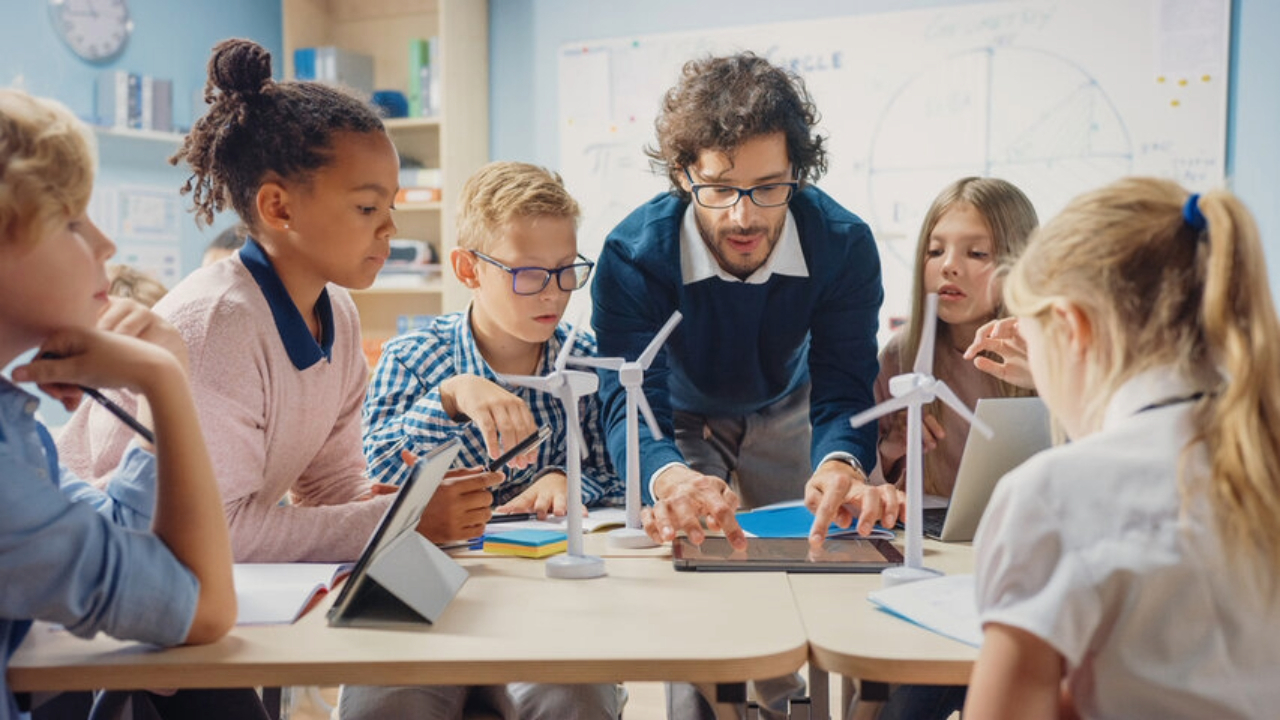
Modern classrooms, however, emphasize student engagement, collaboration, and inquiry. Learning is designed to be interactive, with a focus on problem-solving, discussion, and real life application. Technology is now a primary tool that supports research, creativity, and communication.
This shift reflects a broader reformation of education—not simply as the delivery of content, but as the development of competencies or skills.
Embedding 21st-Century Skills in Education
At the heart of this transformation is the integration of 21st-century skills.
Key skills include critical thinking, effective communication, collaboration, creativity, and digital literacy. When students analyze texts, participate in discussions, and produce structured writing, they are not only learning language—they are learning how to think, question, and express ideas with clarity.
To achieve this, instruction must move beyond exercises. Instead, it should create opportunities for students to use language in authentic contexts, engage in meaningful tasks, and reflect on their learning. In such environments, students explore rather than study.
The Role of the ETEC in Driving Educational Excellence
Educational reform in Saudi Arabia is strongly supported by the Education and Training Evaluation Commission (ETEC), which provides a comprehensive framework for improving teaching and learning across schools. Its standards emphasize student-centered instruction, measurable learning outcomes, and the alignment of curriculum, teaching practices, and assessment.
ETEC encourages schools to adopt research-informed strategies, implement continuous assessment, and ensure that leadership actively supports instructional improvement. For English programs, this includes promoting authentic language use, developing analytical reading skills, and teaching writing as a structured and purposeful process.
When these standards are applied effectively, they contribute directly to the goals of national transformation by preparing students with the skills needed for future academic success.
Instructional Supervision: From Monitoring to Mentoring
A key component of educational transformation is the evolution of instructional supervision.
Traditionally, supervision focused on:
• Checking lesson completion
• Monitoring classroom management
• Providing general feedback
Today, effective supervision has shifted toward a developmental and impactful model. Modern instructional supervision is:
• Data-informed: using evidence of student learning to guide decisions
• Instruction-focused: targeting teaching strategies and classroom practices
• Growth-oriented: supporting continuous teacher development
Supervisors and academic leaders are no longer just evaluators—they are mentors or instructional coaches.
Bridging Policy and Practice: Strategies for Real Impact
To simplify the modern educational views and ETEC standards into classroom practice, schools must:
1. Move from Repetition to Progression Adopt curricula that build skills progressively across grade levels, ensuring increasing complexity in texts, skills, and tasks.
2. Celebrate Skills over Task Completion Focus each lesson on specific learning outcomes, such as inference, analysis, and structured writing, and not just on producing correct answers.
3. Integrate Authentic Learning Experiences Connect learning to real-life contexts through discussions, projects, and problem-based tasks that make language meaningful and relevant.
4. Strengthen Writing as a Process Implement a structured writing approach that includes planning, drafting, feedback, and revision to develop clarity and depth.
5. Use Assessment for Learning Adopt formative assessment practices that provide continuous feedback, guide instruction, and support student growth rather than measure performance.
Leadership as the Core of Transformation
Sustainable educational improvement depends on strong leadership. School leaders play a vital role in shaping a culture of high expectations, collaboration, and continuous growth. Effective leaders align school practices with national standards, support ongoing professional development, and use data to inform decision-making. Leadership, in this context, is not about maintaining existing systems—it is about continuously refining them to meet the demands of modern education. Conclusion The evolution of education is an undeniable reality that leaves no alternative but to adapt. In Saudi Arabia, it reflects a clear and ambitious vision: to build a system that prepares students not only academically, but also for life beyond school. In international schools, this vision must be realized through high-impact programs that develop critical thinking, communication, and other essential 21st-century skills.
By moving beyond traditional practices, aligning with ETEC standards, and strengthening instructional supervision, schools can create meaningful and lasting improvements in student learning.
The future of education is not defined by what is taught. It is defined by what students can think, do, and become. The transformation has already begun. The responsibility now is to ensure it reaches every classroom.
By Mai Tarek
Stay up to date
Subscribe to the free GESS Education newsletter and stay updated with the latest insights, trends, and event news every week. Your email address will remain confidential