Why Holistic Education Depends on Adults, not Activities
We have never had more clarity about what we want students to become. Curious. Resilient. Ethical. Able to contribute to a changing world. Many schools now express these aspirations in graduate profiles, capability frameworks and strategic plans.
But students don’t grow just because we name a value. They grow when adults help them practise it, and when they experience it consistently in the culture around them.
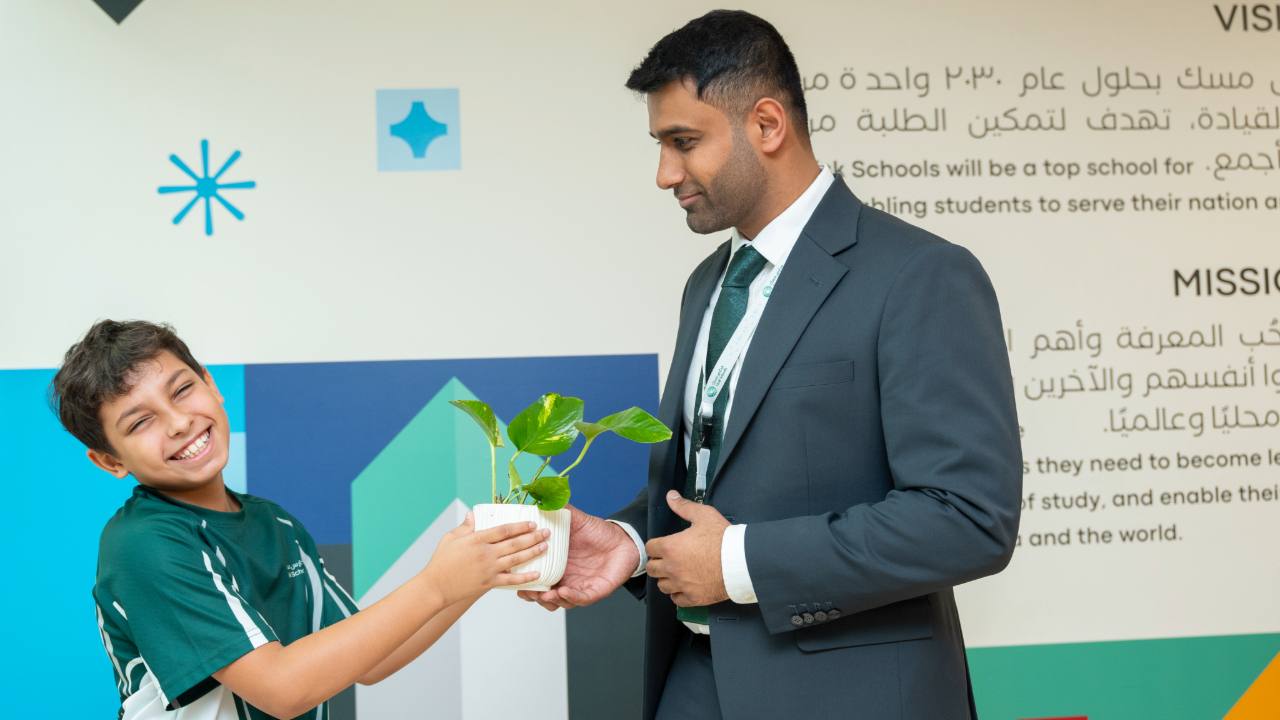
Holistic education is often talked about through activity: leadership weeks, service days, House events, award schemes. These can all be useful. But on their own, they rarely shift capability. What matters more is how adults interpret the school’s vision, how consistently they model it, and whether students encounter it every day, not just during special events.
“Students rise to the level of expectations when they are given meaningful work, clear models of excellence, and the chance to reflect and improve.” – Ron Berger
This is not just a classroom issue. It’s a culture issue. Vision without alignment creates noise. When adults send mixed signals, students learn to read personalities instead of purpose.
When the same framework leads to different results
Picture two schools with the same graduate profile. One weaves those expectations into planning, routines, feedback and staff development. The other launches the profile publicly but leaves daily practice untouched.
In the first, students experience consistency. In the second, they learn to adapt to whichever adult they happen to be with.
Brookings notes that when systems change curriculum without aligning adult practice, the result is “complexity rather than coherence.” Ideas compete. Values fragment. And capability stays on the wall rather than showing up in behaviour.
Each one sends a message about what learning really is.
The moments that matter
In a group project, one student dominates. Another checks out. A third goes quiet. The teacher notices. What happens next?
Do we move on to keep the task going? Step in quietly and redistribute roles? Or pause, name what’s happening and use the moment to build awareness?
These decisions shape the culture. They form the habits that form the learner.
Li and Julian call these “developmental relationships” – interactions where adults guide, stretch and notice with intent. These moments are the active ingredient in youth development. Without them, even well-designed systems remain theoretical.
From activity to progression
In many schools, the pressure to show progress in holistic development leads to what is visible. A badge. A leadership certificate. A one-off challenge.
These things aren’t meaningless. But participation doesn’t guarantee growth. As one student said, “I’ve done a lot. I just don’t know what I’m good at.”
That’s why some schools are beginning to treat co-curricular life as a capability pathway rather than an enrichment list. It means building progression with intent.
“Elite performance is the result of deliberate practice over time, not innate ability alone.” Ericsson et al.
It also means:
- Designing for progression, not just access
- Sequencing challenge, reflection and coaching
- Helping students understand what they’re practising, and why it matters
We see this in sport and the arts, where practice leads to readiness. But it’s not just technical. It’s relational too.
The role of adults in coherence
When adults are not aligned, students adjust. One teacher rewards caution, another risk. One subject values collaboration, another doesn’t. Students notice – and it affects clarity and trust.
Schools that move from design to development tend to shift focus. Less on what’s added, more on how adults show up.
Three things tend to matter most:
Shared definitions that guide practice
The UChicago Consortium found that shared developmental language builds understanding. This means agreeing on what resilience or initiative looks like in Year 4, Year 8, or Year 12, and using that consistently across classrooms.
Feedback that names growth
Students don’t always see their own progress. When teachers name it, “you waited so others could lead,” “you changed your approach when things didn’t work”, they give students a mirror. As Project Zero says, assessment should help learners improve, not just tell them where they stand.
Modelling under pressure
Students notice what adults do when it’s hard. If we say resilience matters but avoid tension, the message weakens. If we claim to value voice but don’t invite it in meetings, students spot the gap. Culture is built on what adults repeat.
Capability and national readiness
In contexts like Saudi Arabia, this coherence is about more than school culture. Vision 2030 imagines young people who can lead, innovate and represent the Kingdom globally. The platforms already exist: Olympiads, fairs, forums. But readiness doesn’t begin with selection. It begins much earlier.
The results of that early investment are already showing. In one case, a student was admitted to Stanford University, not just for exam outcomes, but for leading a high-level research project facilitated through structured co-curricular support. When capability is built intentionally, opportunity becomes possible in places we might not expect.
Initiatives like these are critical, but only as strong as the systems beneath them. As noted in recent work on progression design, “Schools that embed deliberate practice into co-curricular systems create pipelines where students are systematically prepared, not randomly selected, for high-level opportunities.”
UNESCO writes that education must empower learners to act and contribute meaningfully to the world around them. That kind of readiness is built slowly, through the habits, feedback and modelling that students experience every day.
From vision to readiness
The challenge is not deciding what we want students to become. It’s creating the conditions for them to practise, stretch and grow into it.
Frameworks help. Structured opportunities help. But in the end, what makes them real is how adults act. How they interpret values. How they give feedback. How they model what matters.
“No child ever grew from a poster. They grew because of a teacher.”
References
Berger, R. (2020) What We Say and How We Say It. EL Education. Available at: https://eleducation.org/resources/what-we-say-and-how-we-say-it
Brookings Institution (2019) Education system alignment for 21st century skills: Focus on assessment. Washington, DC: Brookings Institution.
Ericsson, K. A., Krampe, R. T. and Tesch-Römer, C. (1993) 'The role of deliberate practice in the acquisition of expert performance', Psychological Review, 100(3), pp. 363–406.
Li, J. and Julian, M. (2012) 'Developmental relationships as the active ingredient: A unifying working hypothesis of "what works" across interventions', American Journal of Orthopsychiatry, 82(2), pp. 157–166.
Project Zero (2022) Making Learning Visible / Assessment. Harvard Graduate School of Education. Available at: https://pz.harvard.edu/assessment-learning-visible
UChicago Consortium on School Research (2015) Foundations for Young Adult Success: A Developmental Framework. Chicago: University of Chicago.
UNESCO (2015) Global Citizenship Education: Topics and Learning Objectives. Paris: UNESCO.
By Aqeel Ashiq and Hillal Kara-Ali, Misk Schools
Authors
Aqeel Ashiq is Vice Principal at Misk Schools, where he designs and leads system-level approaches to holistic education and capability development aligned to Saudi Arabia’s Vision 2030. He combines research-informed practice with strategic design to support scalable educational models.
Hillal Kara-Ali is Vice Principal at Misk Schools and leads Project 10, an initiative focused on preparing students for national and international excellence through competitions, innovation, and purposeful experiences. His work centres on developing scalable systems that nurture talent and align with Saudi Arabia’s Vision 2030.
Stay up to date
Subscribe to the free GESS Education newsletter and stay updated with the latest insights, trends, and event news every week. Your email address will remain confidential