Building Strong Foundations: Early Childhood Education Excellence in the Saudi Context
Early childhood education is the foundation of lifelong learning. It is during these early years that children develop the cognitive, social, emotional, and language skills that shape how they learn, relate to others, and navigate the world. What happens in these years does not just prepare children for school, it determines how they approach learning for life.
Saudi Arabia, through Vision 2030, has placed early childhood education at the centre of its national development agenda. This is a significant and forward-looking commitment. Strengthening the early years is one of the most effective ways to improve long-term educational outcomes, build human capability, and support a knowledge-based economy. The opportunity now is not only expansion, but quality ensuring that early childhood education is grounded in strong pedagogy, cultural identity, and meaningful learning experiences.
What quality in early childhood education really means
High-quality early years education is often misunderstood as early academic preparation. In reality, the strongest systems in the world focus on something very different.
Quality is defined by:
- The quality of adult-child interactions
- The learning environment and how it is designed
- The pedagogy that guides daily practice
Children at this stage learn best through relationships, play, exploration, and communication. They do not need accelerated academic content. They need strong foundations in language, emotional regulation, attention, curiosity, and independence. When these foundations are in place, academic learning becomes more natural, deeper, and more sustainable later on.
One of the most widely referenced examples of this approach is Finland’s early childhood education system. Finnish pedagogy places strong emphasis on play-based learning, child agency, and highly trained educators who observe and respond to children’s development rather than follow rigid instructional delivery. The focus is on wellbeing, curiosity, and learning through meaningful experiences.
FinlandWay International Preschools is built on this foundation, adapting Finnish early education principles for international contexts. The emphasis remains consistent: developmentally appropriate practice, strong teacher-child interaction, and learning environments that prioritise exploration, language development, and social-emotional growth. In practice, this means designing early years settings where children are active participants in their learning, and where teachers guide rather than direct learning.
Aligning early childhood education with Saudi identity and values
In the Saudi context, early childhood education must reflect both global best practice and local identity. These are not competing priorities, they strengthen each other when designed well.
Arabic language development is central in the early years. Language is not built through isolated lessons, but through meaningful interaction, storytelling, shared experiences, and daily communication. The richness of language exposure at this stage directly impacts long-term literacy and learning outcomes. At the same time, Islamic values and Saudi cultural identity are not “add-ons” to the curriculum. They are embedded in how children experience school life through relationships, behaviour, routines, and community connections. Values such as respect, kindness, responsibility, and care are learned through practice, not instruction. When children see their identity reflected in their environment, they develop confidence, belonging, and emotional security, all essential for learning.
The role of play in deep learning
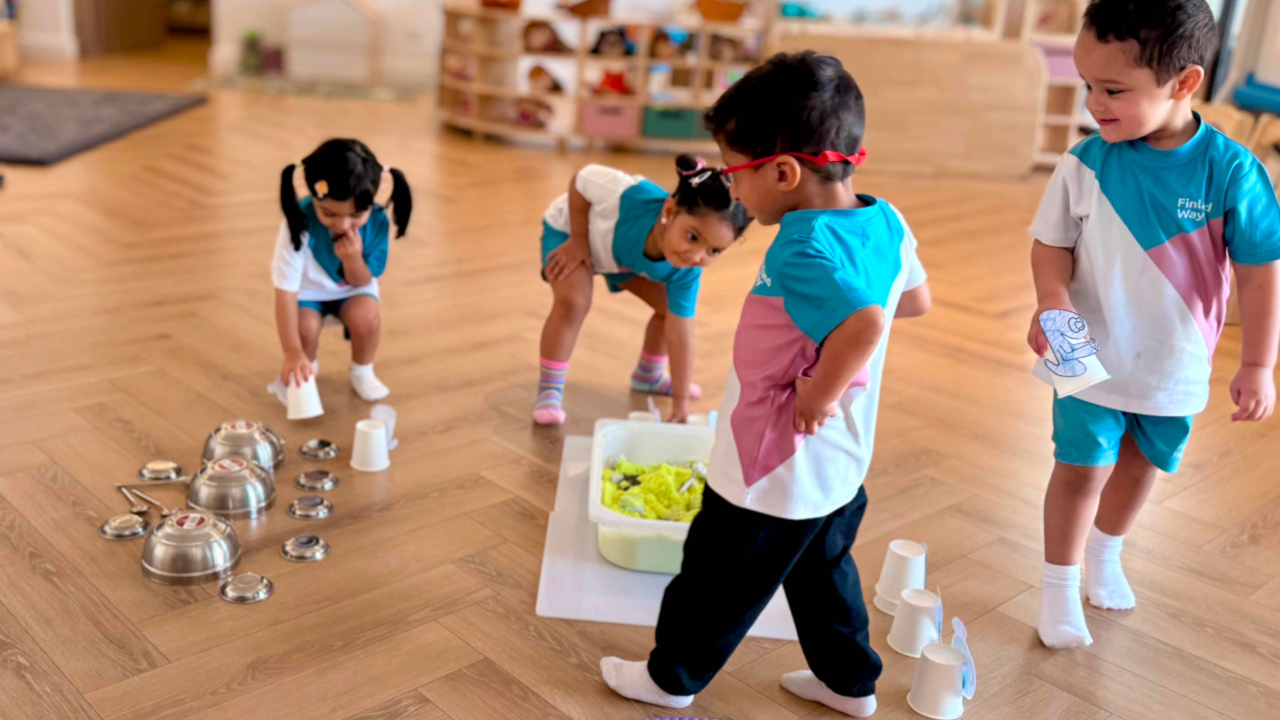
Play is one of the most powerful tools for learning in early childhood. It is not separate from education; it is the method through which young children develop core skills.
Through play, children:
- Develop language naturally through interaction
- Learn problem-solving and critical thinking
- Build social skills such as negotiation and cooperation
- Explore ideas, test hypotheses, and understand cause and effect
- Develop resilience through trial, error, and persistence
Effective early years environments are intentionally designed to support this type of learning. Resources, spaces, and daily routines are structured to provoke curiosity and deepen thinking.
The role of the educator is essential. Teachers are not simply facilitating activity, they are observing, extending learning, asking the right questions, and introducing language and concepts at the right moment. This is what transforms play from experience into learning.
Social and emotional development as the foundation
Before children can engage fully in academic learning, they need to feel secure.
Emotional wellbeing is not separate from education—it is the condition that allows learning to happen. Children need consistency, trust, and strong relationships with adults in order to explore and take learning risks.
Strong early years environments prioritise:
- Predictable routines
- Positive and responsive relationships
- Clear boundaries and expectations
- Opportunities for independence and choice
These conditions build self-regulation, confidence, and resilience. Without them, learning becomes fragmented and less effective.
The importance of skilled educators
The quality of early childhood education is ultimately determined by the quality of its educators.
Effective early years teachers understand child development deeply. They know how to:
- Observe and interpret learning
- Respond in real time to children’s needs
- Extend thinking through language and interaction
- Adapt environments and experiences to support progression
- Build strong, consistent routines and expectations
In high-performing systems, including Finland’s early education model, teachers are highly trusted professionals who operate with significant autonomy within a clear pedagogical framework. This professional trust is a key reason for the consistency and quality seen in Finnish early years settings.
FinlandWay applies a similar principle: clear pedagogical foundations combined with empowered educators who make daily decisions based on children’s development rather than prescriptive delivery. This requires ongoing training, reflection, and strong leadership support.
Families as partners in early learning
Children learn continuously between home and school. For this reason, family engagement is not optional, it is central to effective early childhood education.
Strong partnerships between educators and families create consistency in expectations, behaviour, and learning support. When parents are engaged in their child’s development, learning outcomes improve significantly.
In Saudi Arabia, where family structures and community ties are strong, this partnership is especially powerful. Schools that actively involve families create continuity between cultural values at home and learning experiences at school. This strengthens both learning and identity.
Preparing children for the future
The world children are growing into will require more than academic knowledge. They will need adaptability, communication skills, creativity, and the ability to collaborate and solve problems. These skills do not begin in primary school, they are developed in the early years.
When early childhood education is done well, children enter formal schooling with confidence, curiosity, and a strong sense of self. They are ready not just for academic content, but for learning itself.
This aligns directly with the ambitions of Vision 2030, which aims to develop a generation equipped for a changing global landscape while remaining grounded in Saudi values and identity. Building excellence in early childhood education is not about importing models or accelerating academics. It is about getting the fundamentals right.
Strong relationships. High-quality interactions. Purposeful environments. Play-based learning. Cultural and linguistic identity. Family partnership. When these elements come together, early childhood education becomes what it should be, a powerful foundation for lifelong learning and national development.
Saudi Arabia is already making significant progress in this space. The next step is ensuring that quality, not just access, defines the future of early years education.
By Maryum Nawaz
Stay up to date
Subscribe to the free GESS Education newsletter and stay updated with the latest insights, trends, and event news every week. Your email address will remain confidential